plumbing company marketing 11 min read
Plumbing Company Marketing: Book More Local Jobs
Master plumbing company marketing with a proven playbook for local search, paid ads, and SMS follow-up sequences that turn clicks into booked service calls.
On this page
Most plumbing marketing advice still chases the cheapest lead and calls that growth. That's how companies end up celebrating busy dashboards while the office misses calls, fills the calendar with low-value jobs, and never learns which inquiries turn into profitable work.
Plumbing company marketing works when it is built around the economics of booked jobs, not vanity metrics. The right question isn't how to buy the lowest-cost click, it's how to route the right demand fast enough to win the job, protect margin, and keep the technician schedule full.
The Real Economics of Plumbing Leads
Cheap leads are often expensive in disguise. A form fill that never answers the phone, a spam inquiry, or a price shopper who vanishes after one quote can look efficient in your ad platform and still do nothing for revenue.
Measure the lead after the call, not before it
The plumbing market is large, fragmented, and local by nature, with thousands of companies competing across separate service territories, so broad awareness alone doesn't solve the problem. The Better Business Bureau industry report places the sector at an estimated $124 billion market value, while IBISWorld's later estimate puts plumbers' industry revenue at $208.1 billion in 2026, with about 129,000 businesses after a 1.7% annual increase from 2021 to 2026, all of which reinforces why local acquisition matters industry report.
That scale changes how you judge media. A channel with a higher cost per lead can still be the better buy if it produces larger jobs, stronger close rates, or more reliable booking. The right internal model starts with gross profit, technician capacity, close rate, cancellation risk, and repeat business, then works backward to the maximum you can pay for a booked job.
Practical rule: track tracked leads, qualified conversations, booked appointments, and completed jobs as separate stages. If those numbers are blurred together, your CPA target is fiction.
Build a break-even model by job type
Drain cleaning, water heater repair, repipes, and sewer work don't behave the same way, so they shouldn't share one all-purpose target. Emergency work can justify a different allowable acquisition cost than planned replacements because the booking behavior and job value are different.
If you want a useful benchmark source for lead-gen operators in adjacent local categories, find leads with LLMrefs is a reasonable place to compare how search-driven demand gets turned into actual pipeline. For plumbing specifically, the point is simpler, you need a profitable cost per booked job by service line, not a generic cost per lead.
A lot of companies stop at “we got the lead.” That's where the economics go wrong. The business only wins when the phone is answered, the job is serviceable, and the appointment gets booked at a margin that still works after labor, dispatch, and truck time.
Capturing High-Intent Local Search Demand
Plumbing search traffic is different from general home-improvement browsing. People search when something is leaking, clogged, cold, or getting worse, which means the job is not collecting clicks. It is catching the right inquiry fast enough to turn it into a booked job.
Bluegrid Media's contractor search data reports that Google Search is used by 77.6% of home-services consumers for discovery, ahead of Google Maps at 51.4% and social media at 34.4%. The same research points to about 60,000 monthly U.S. searches for plumbing-related keywords, and earlier local-search data found that “local” and “near me” searches increased 350-fold between 2009 and 2019, while 78% of mobile local searches led to a purchase within 24 hours search and phone behavior.
Search visibility only matters if it becomes a call
Plumbing is a phone business first. LSA-reported figures summarized by Invoca indicate that 93% of consumers call a business after searching for a plumber, compared with 84% for HVAC and 82% for electricians phone conversion behavior. That means search visibility has to produce a tap-to-call, a credible answer, and a booked appointment, not just an impression in a report.
The economics only work when measurement follows the same path. Traffic without qualified calls does not pay the dispatch board. Reviews, service details, and response speed matter because the homeowner is usually trying to solve the problem that day, not next week.
For profile work, start with your Google Business Profile and your local listing hygiene. Clean service areas, accurate hours, and consistent review handling matter more than polished copy. A practical walk-through sits in this Google My Business page guide, which is the right place to tighten the listing before you spend aggressively on ads.
Route demand by intent, not by guesswork
The mistake is treating every query the same. Emergency searches need a faster path to a human, while routine searches need enough information to make a scheduled booking feel safe.
That is why local search should be built as a demand-capture system. If you run it like awareness media, you will pay for urgency and fail to convert it. The better model is simple: urgent terms, routine terms, and brand searches should be routed differently, with separate follow-up rules for each.
For plumbing teams mapping local visibility and review signals into one workflow, the RecensioAI plumbing strategy is useful context. Plumbing search is still won or lost at the point of contact, and trust has to hold before the call connects.
Engineering Paid Campaigns by Service Urgency
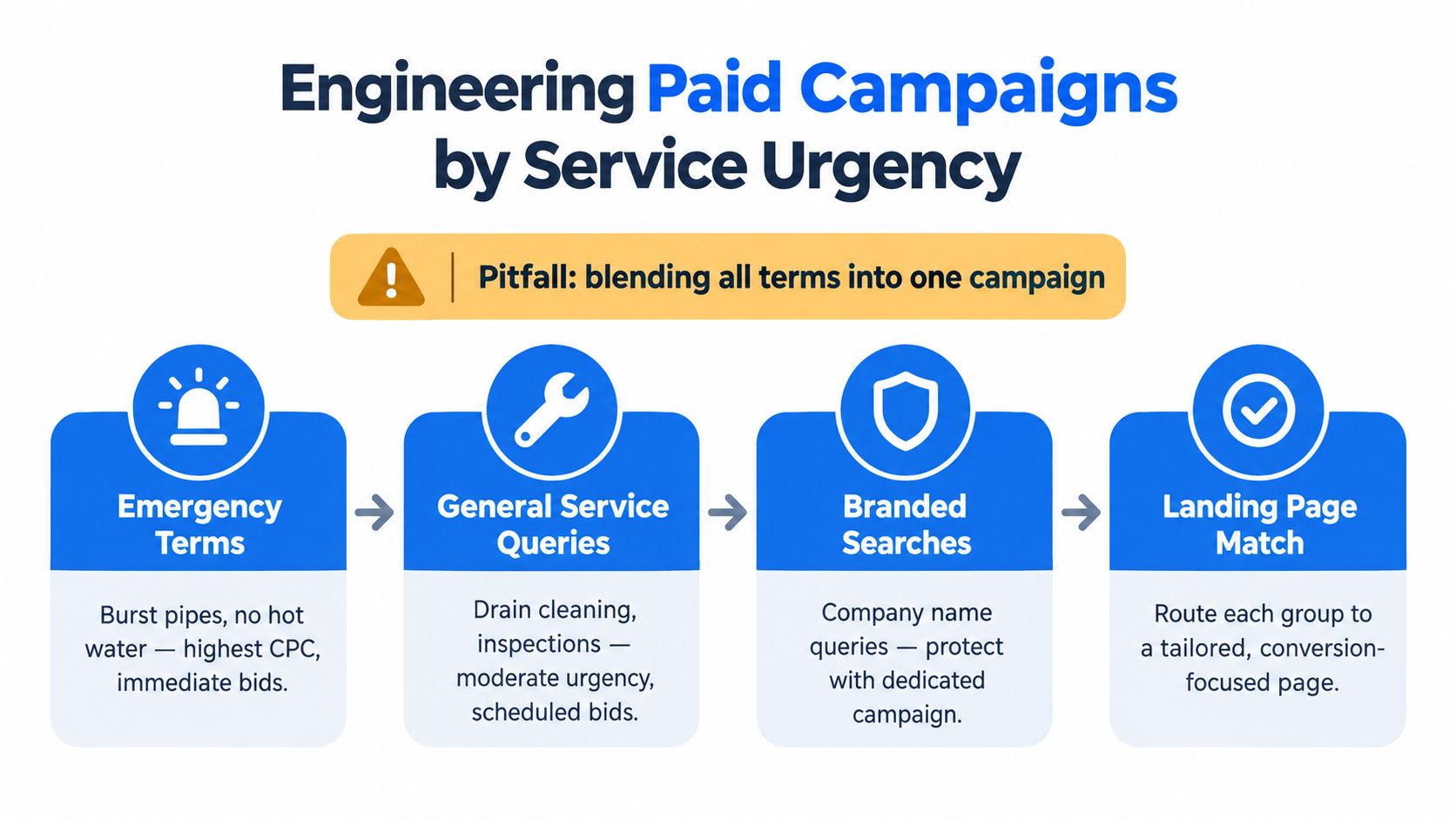
Plumbing paid search breaks down when every lead gets treated like the same lead. Burst-pipe emergencies, planned water-heater work, and branded searches have different economics, different response windows, and different booking odds.
Separate intent before you optimize anything
Build separate campaign groups for emergency terms, general service terms, and branded searches. “Burst pipe repair” needs a faster path to a person than “water heater repair,” and both need a different flow from someone searching your company name. If you are also running paid social, our Facebook ads for plumbers playbook helps keep that structure from blending together.
Send each group to a matching mobile page with one primary action. Urgent work should push tap-to-call. Nonurgent jobs should use a short form or scheduling flow. The page should match the urgency of the query instead of forcing every visitor into the same path.
Use the controls that keep bad leads out
The work that protects margin sits in exclusions and filters. Set geographic exclusions, verify service areas, and use negative keywords for DIY, jobs, parts, training, and free advice. If someone is looking for a weekend project, they are not your lead.
LocaliQ's 2025 home-services benchmark places plumbing search at a 7.63% conversion rate, with a median cost per lead of about $129.02 and a 4.97% click-through rate in one dataset, but those figures are only directional because geography, service mix, bidding, and call counting all change results plumbing benchmarks. Use them as context, not as a promise.
Judge campaigns by qualified calls
Cheap form fills are not the target. Cost per qualified call and booked-job rate are the metrics that matter, because they show whether the campaign is producing work or just activity.
That means your CRM or offline import needs to carry campaign, keyword, landing page, caller ID, duration, answered status, booked-job status, and revenue. Without that chain, you cannot tell which service line paid back.
Plumbing paid search works when intent segmentation is real and the follow-up process matches it. If you cannot tell which service line booked the job, you are still paying for clicks instead of buying work.
Automating Ad Creative and Conversion Tracking
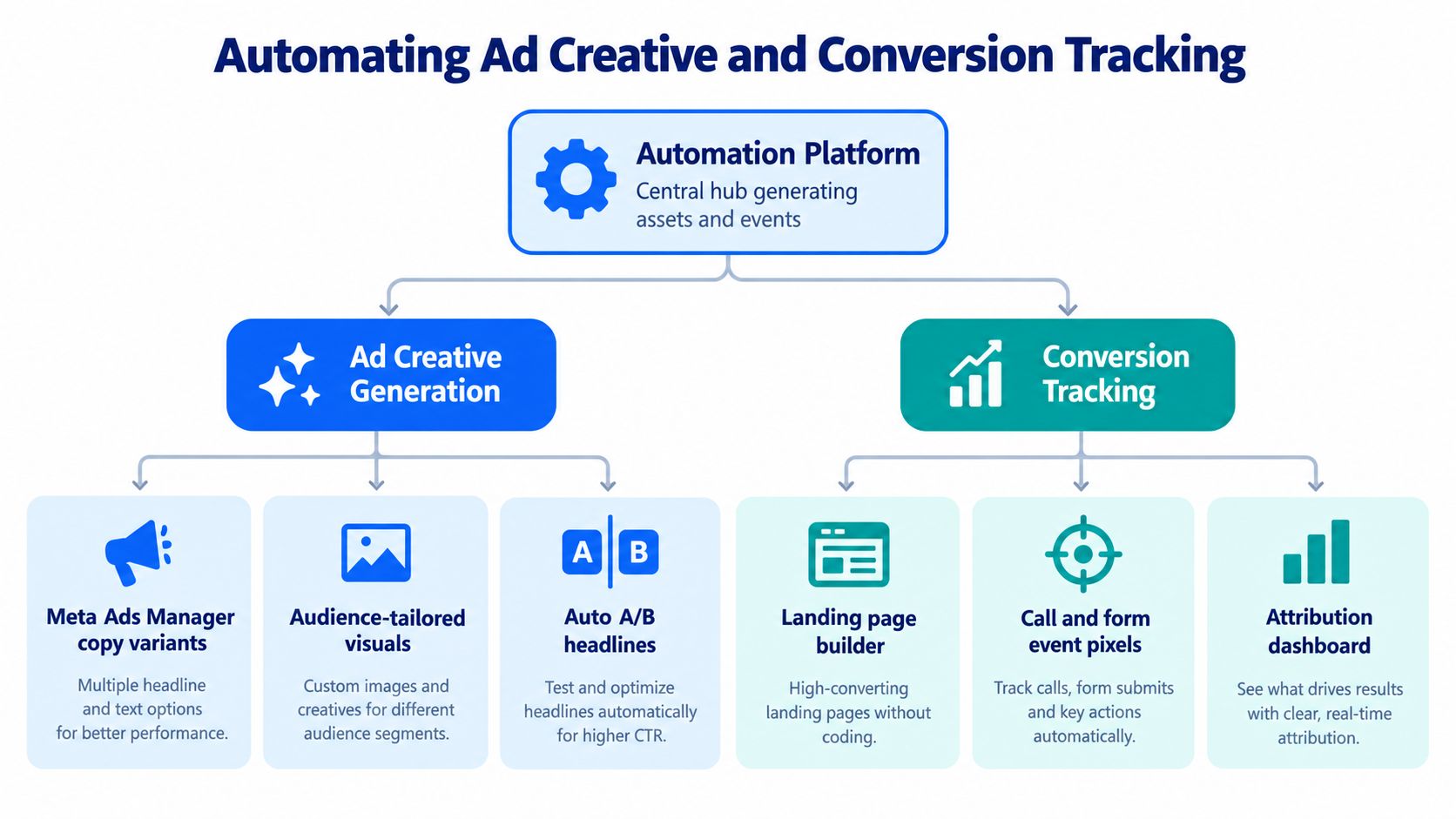
The old way of running local ads drains time fast. Someone has to draft copy, upload images, build landing pages, connect tracking, and keep checking whether the lead data matches the ad data.
Automation helps when it removes busywork without removing control. BenjiAds is one option in that category, since it automates trade-specific ad creative, hosted landing funnels, and conversion tracking while keeping campaigns paused until approval. That matters because plumbing owners usually need speed, but they also need the ability to say yes or no before anything runs.
Let software handle the repetitive pieces
Benefit isn't novelty, it's consistency. When ad variations, funnel pages, and tracked events are generated from the same system, the campaign is less likely to drift into mismatched messaging or broken attribution.
Daily reporting should translate platform metrics into plain-English outcomes. Owners don't need another pile of abstractions. They need to know which creative produced the call, which page converted, and which leads turned into booked jobs.
Use dual tracking so the platform learns correctly
Server-side and client-side conversion data serve different roles. One helps the ad platform learn, the other helps you verify what happened after the click.
That dual view matters in home services because the meaningful event isn't just a pageview. It's the call, the SMS reply, the booked slot, and the technician visit that follows. If you only track one side of that path, the system learns from incomplete data and your optimization gets noisy.
Approval workflows matter too. A good setup keeps the business in charge while automation handles the repetitive execution. That's the balance local operators need, especially when they're trying to grow without hiring a full media-buying team.
Designing Urgency-Based Lead Follow-Up Sequences
Speed matters, but speed without clarity can backfire. An instant reply that sounds generic or overpromises availability can create mistrust, especially when the customer is already stressed.
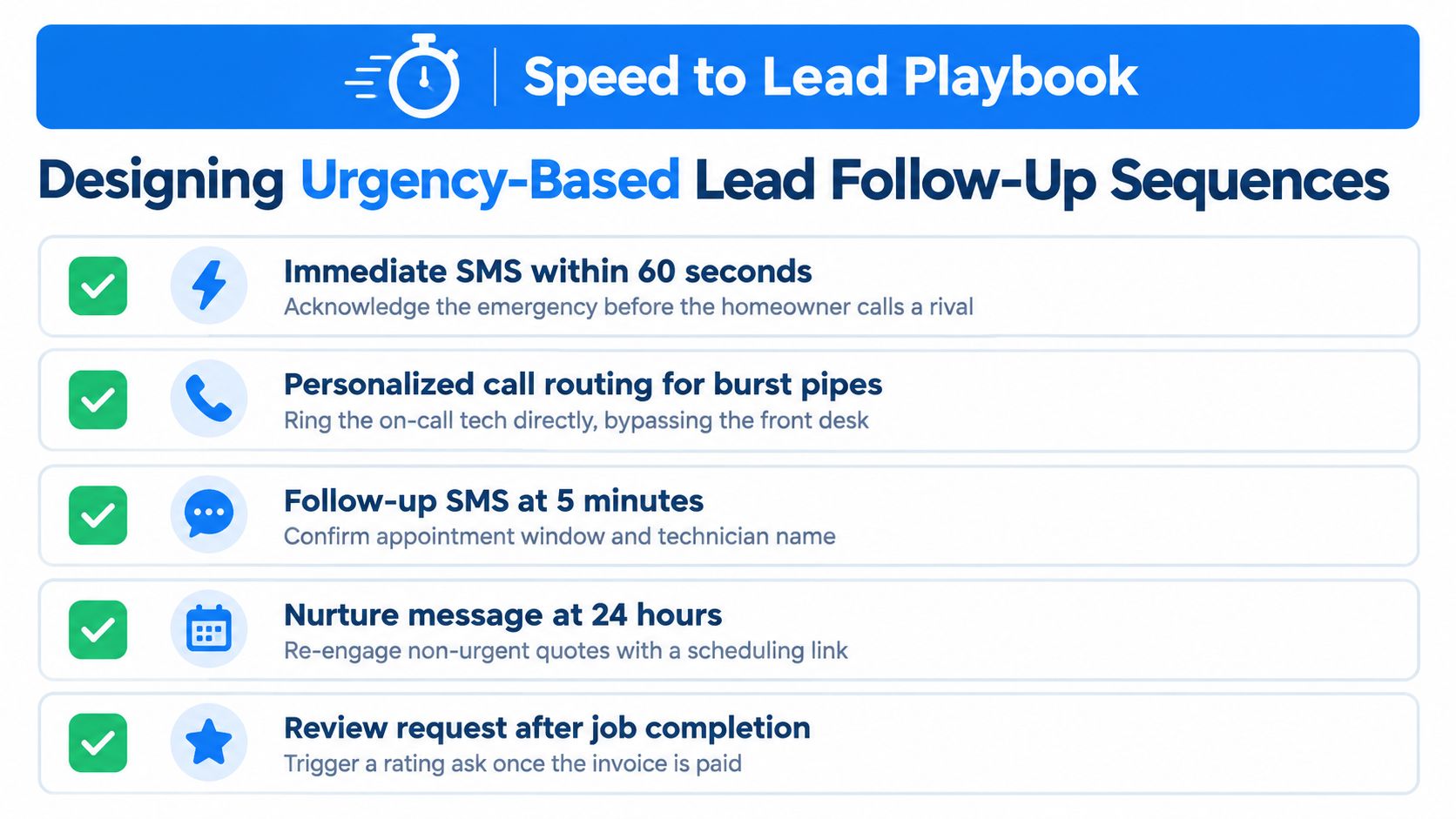
The right sequence depends on urgency. Emergency inquiries need immediate human attention. Scheduled work can tolerate a slightly slower, more explanatory follow-up as long as the next step is obvious.
Build different paths for emergency and non-urgent leads
For urgent jobs, send an immediate SMS, then route the call to the on-call tech if that's how your shop operates. For nonurgent quote requests, send a short confirmation, then offer scheduling windows, financing info, or prep instructions.
The lead-response research cited in the available results is blunt. Contacting an inbound lead within five minutes made companies 21 times more likely to qualify it than waiting 30 minutes, and another summary of the same research said contacting within an hour was nearly seven times more likely to produce a qualifying conversation than waiting another hour and more than 60 times more likely than waiting 24 hours or longer lead response timing. That's why your workflow has to hit fast and then stay organized.
Stop the sequence when the lead answers
Automation should continue until the person replies, opts out, or books. After that, the system needs to stop itself. Otherwise, you create the exact frustration that destroys trust.
A practical flow looks like this:
- Immediate acknowledgment: confirm the request and state the next step.
- Five-minute human call: attempt a live conversation while the inquiry is fresh.
- After-hours message: say what you can do, what you can't, and when the next human response will come.
- Scheduled follow-up: send concise reminders for quotes or appointments.
- Post-job review ask: request feedback after completion, not before.
For the automation layer, lead nurturing automation is the right internal reference if you want a system that handles routing and follow-up without making every lead feel like a canned sequence.
Protect trust while you move fast
Consent-compliant messaging, opt-out handling, and clear identification aren't paperwork details. They're part of the customer experience. A fast response that feels misleading does more damage than a slower response that tells the truth.
Scaling Growth Without Agency Retainers
The old choice was painful. You either paid a retainer and hoped the agency stayed responsive, or you stitched together a messy stack of tools and lost time to setup and maintenance.
A unified software approach is cleaner for plumbing company marketing because the costs line up more directly with ad spend. BenjiAds uses wallet-based billing and a flat management fee tied to spend, so ads and funnels can be prepared, paused, and approved without committing to a full monthly subscription before you're ready to launch.
Keep ownership and access inside the business
The biggest operational win is control. Leads should come to the business, not disappear into a closed system where phone details are hidden and follow-up is hard to audit.
That matters for plumbers because response speed, answer rate, and booked jobs all live or die on access. If the owner or office manager can see the contact details, the workflow is easier to supervise and the sales process becomes more accountable.
Spend where the result is visible
When ads, landing pages, SMS intake, and reporting sit in one place, you can see which service line is carrying its weight. That's a better setup than paying for disconnected software or waiting on an agency to make every change.
The point isn't that every shop should automate everything immediately. The point is that growth becomes easier when the system is built to move demand from ad click to booked job without unnecessary handoffs.
If you're ready to stop buying cheap leads and start building a response system that books real plumbing jobs, take a look at benjiads. It combines ad creative, landing pages, tracking, and SMS follow-up so local service businesses can manage acquisition in one place and keep control over the campaign.
- plumbing company marketing
- plumber lead generation
- local service ads
- SMS follow-up
- home service marketing
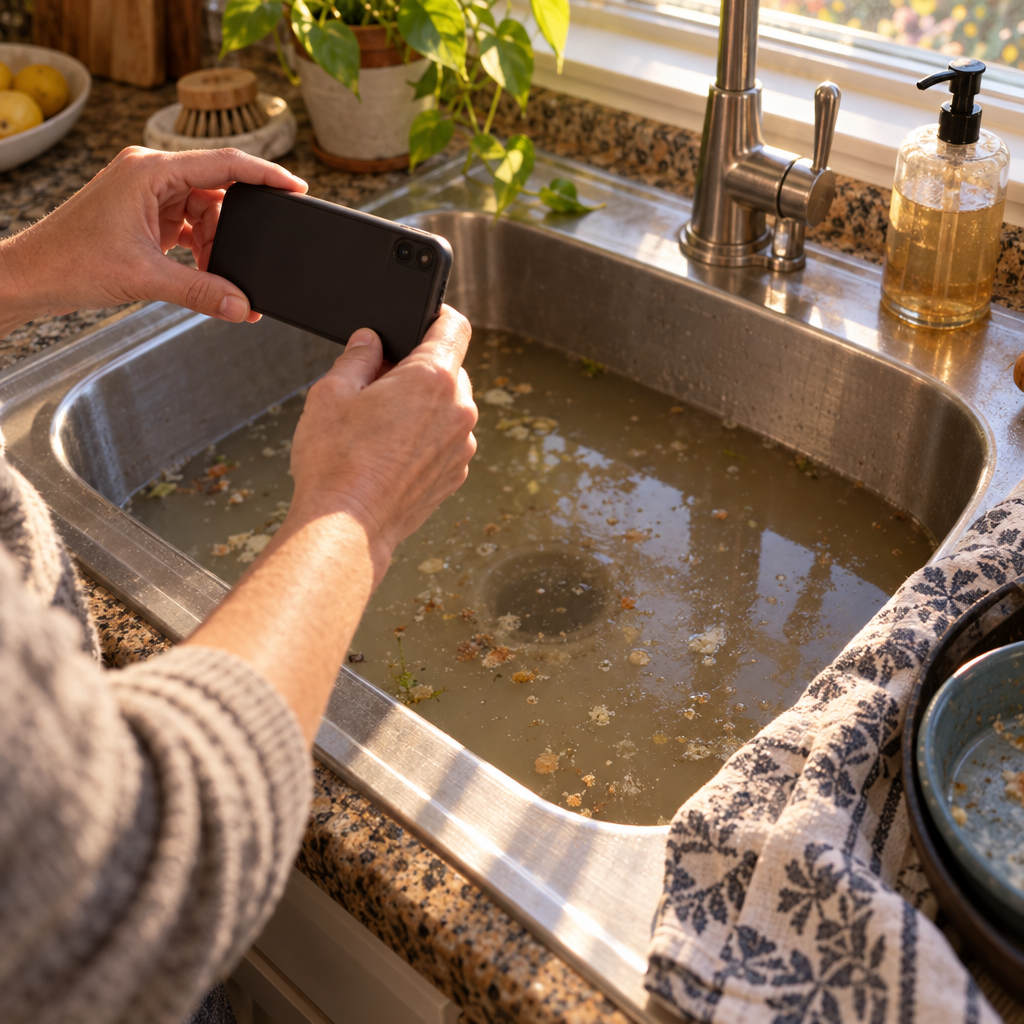
GET A CLOGGED SINK QUOTE BY TEXT
Get a clogged sink quote by text
Free estimates
Ads created · live on FB & IG
For plumbers
Your plumber ads, live in 2 minutes.
- ✓ Ads created for you
- ✓ Every lead texts your phone
- ✓ Free to use, no credit card
748+ local businesses run ads with benjiads