facebook ads automation tool 12 min read
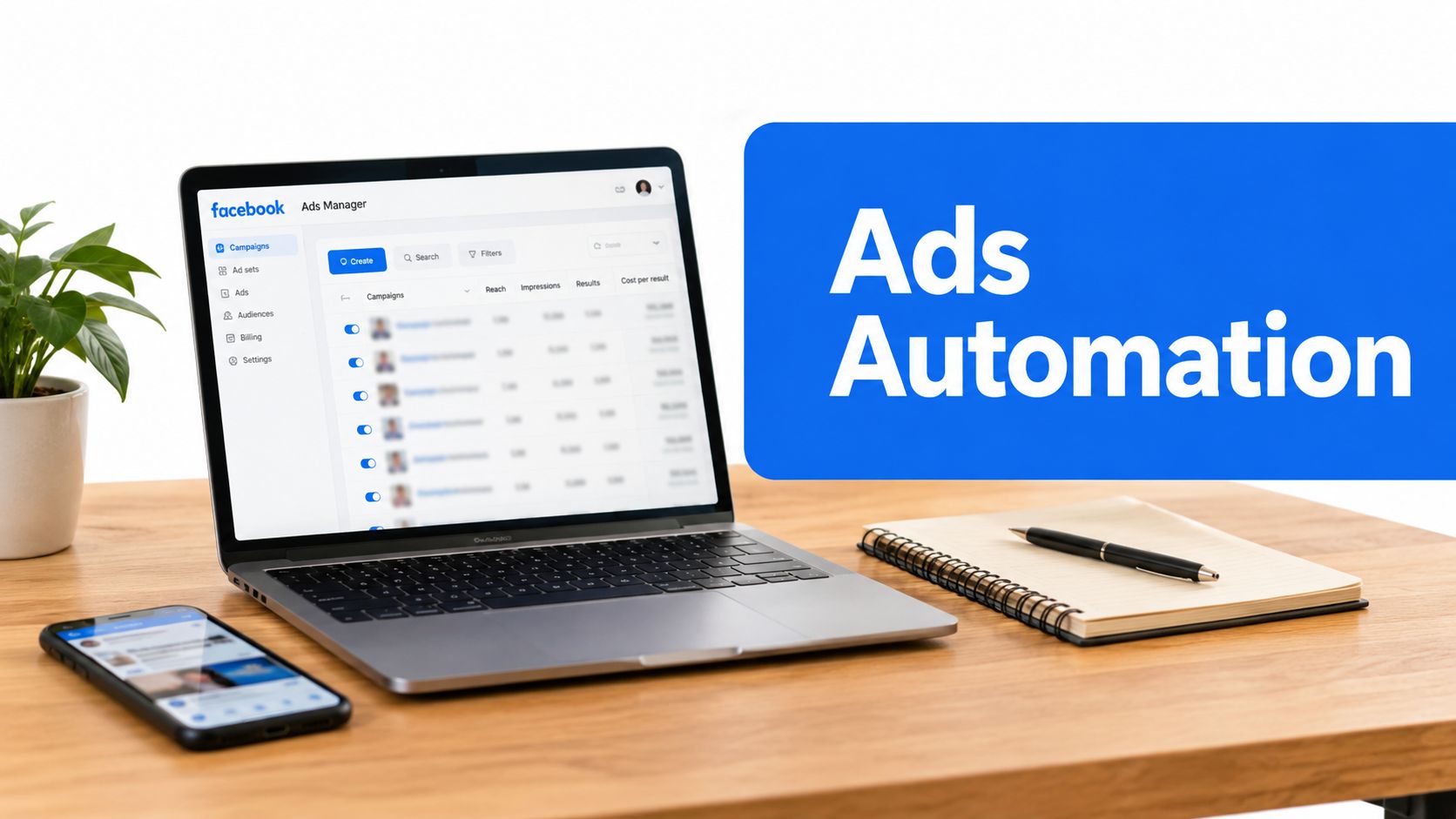
Facebook Ads Automation Tool Guide
Discover how a facebook ads automation tool streamlines campaigns, approvals, and lead follow-up for local service businesses to drive real revenue.
On this page
The popular advice says to turn on Meta automation and let it run. That's only half the job for local businesses. A facebook ads automation tool can lower the cost of delivery, but it can't book the job, answer the lead, or tell you why a plumbing creative stopped working for your market.
That gap matters because Meta's automation has already become the default operating model in major ad accounts. By 2025, 82% of Facebook advertisers were using Meta's Advantage+ automation suite, and market roundups say AI bidding delivered 27% higher return on ad spend than manual campaigns, while more than 4 million advertisers were using Meta's generative AI features to create over 15 million AI-enhanced ads each month by late 2025 (Shno market statistics on Facebook ads automation). The platform is clearly moving toward AI-driven campaign creation at scale, but local service businesses still need something Meta doesn't provide on its own, a clean bridge from ad click to real revenue.
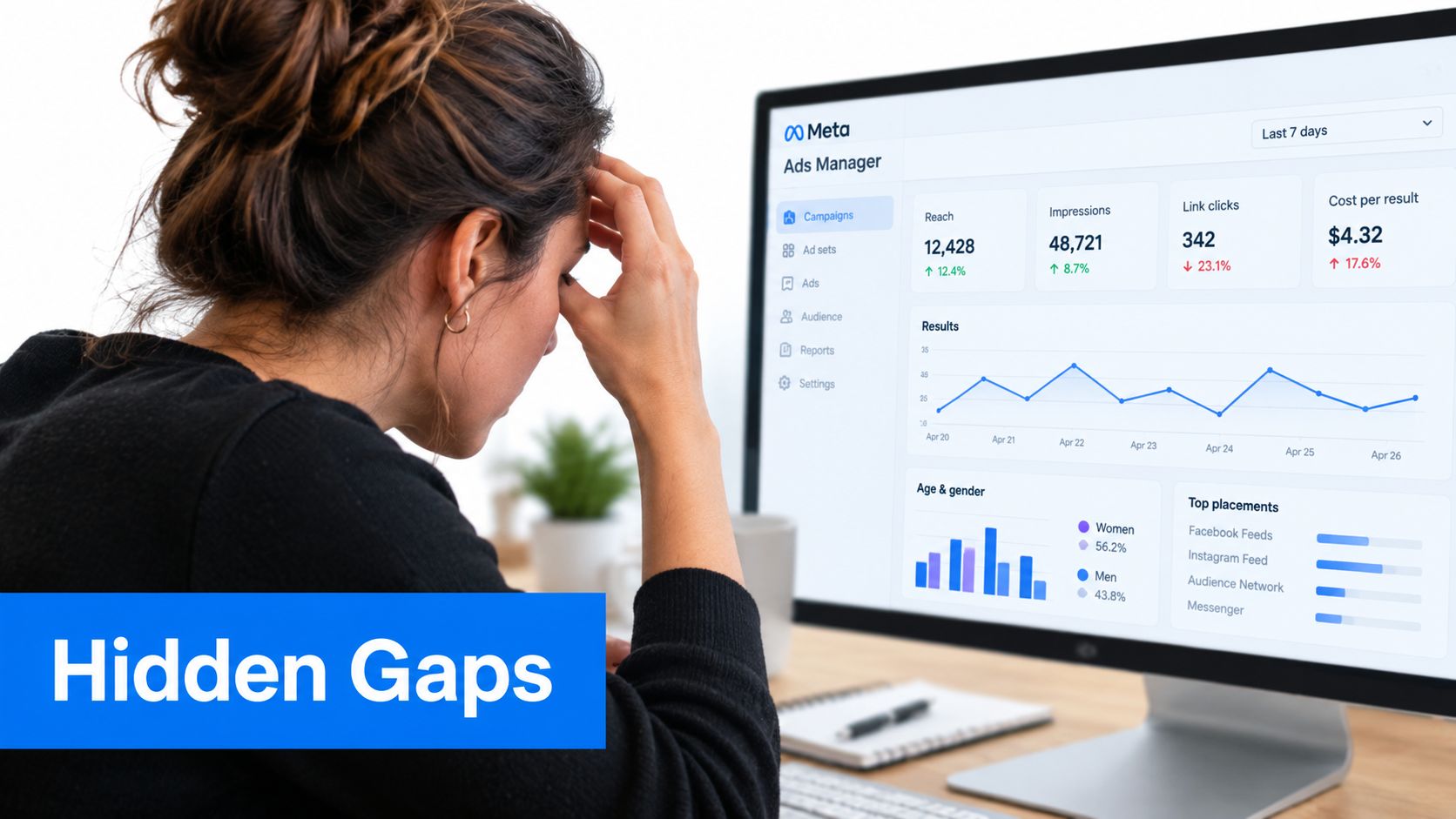
The Hidden Gaps in Native Ad Automation
Meta's built-in automation is useful, but it stops at the platform boundary. It can adjust budgets, pause weak ads, and widen targeting, yet it doesn't reliably generate fresh creative for a plumber, a dentist, or an HVAC company when the offer gets stale. It also doesn't sit between the lead form and the office phone to make sure somebody responds fast enough.
Bidding is not the same as operating the business
Meta's automation history started with rules in Ads Manager and has moved toward end-to-end AI ad generation. Those rules can pause an ad set when cost per result rises above a threshold, or change budgets when performance moves, which is helpful for keeping waste under control (Sprout Social on Facebook automation). Meta's broader ecosystem also reaches about 3.3 billion monthly users across Facebook, Instagram, Messenger, and the Audience Network, so automated delivery matters at scale in a way it didn't a few years ago (Sprout Social on Facebook automation).
But local service owners don't get paid for optimized delivery alone. They get paid when a homeowner answers the call, a receptionist books the appointment, or a lead becomes a verified phone conversation. That's why a real facebook ads automation tool has to do more than manage bids. It has to support creative generation, approval, tracking, and follow-up as one workflow.
Practical rule: if the lead can sit untouched for ten minutes, the campaign is already leaking value.
A lot of native tools also assume the advertiser can keep feeding the account with fresh assets. That's where many teams stall. They can automate the media buying, but they still don't have a system that reliably creates new angles, keeps the business in control before launch, or catches leads the second they arrive.
For a local operator, that missing layer matters more than the bid strategy. The click is the easy part. The job gets booked after the click, and that's the part most automation leaves exposed. For a software example that handles the operational side, see BenjiAds' ad management software overview.
How Modern Facebook Ads Automation Tools Work
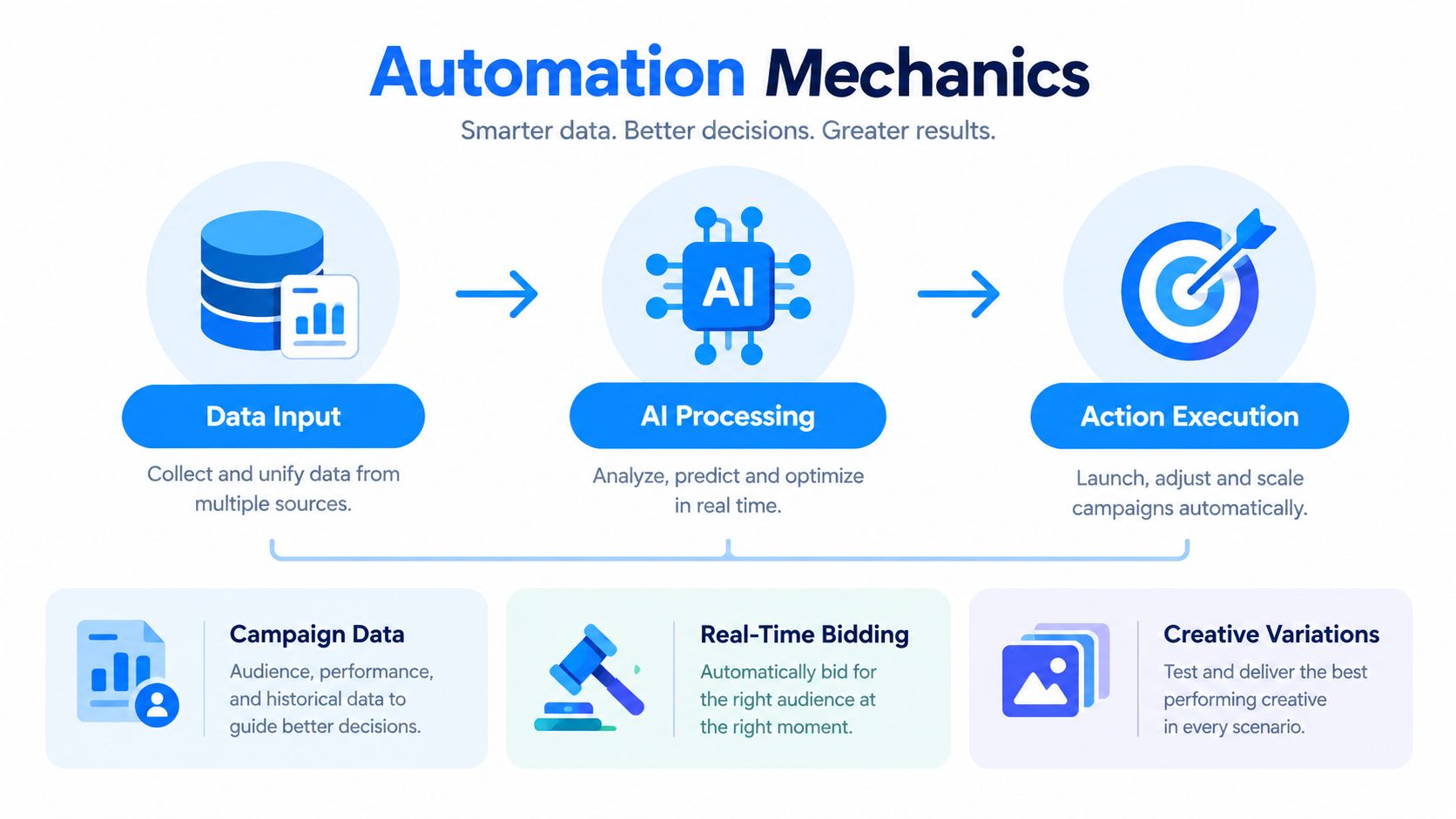
A modern tool doesn't just flip budget rules on and off. It takes trade-specific inputs, campaign goals, and conversion signals, then turns them into structured campaigns, ads, and follow-up workflows. That's a very different job from a basic rule engine in Ads Manager.
From manual setup to AI-assisted execution
Meta's own automation stack now leans on Advantage detailed targeting, which delivered a 37% lower median cost per incremental conversion than campaigns not using it (Meta Business news on Advantage automation). The important part is not just the number, it's the mechanism. When you let the system expand beyond overly narrow audience constraints, it has room to learn from conversion signals instead of being boxed in by assumptions.
That same logic applies to software built for local services. The tool should accept a business type, service area, offer, and conversion goal, then assemble the campaign structure around that input. Instead of asking a contractor to become an Ads Manager specialist, the software should handle the setup work and preserve the owner's approval rights before anything goes live.
The parts that should be automated
A useful system usually handles three layers at once.
- Campaign structure: build the account with pre-set objectives, audiences, and budget logic that fit the trade.
- Creative production: generate copy and images that reflect the service, the market, and the offer.
- Tracking and routing: wire leads into a funnel, then pass them to the right follow-up path without manual copying.
Automation works best when the system has enough signal to learn and enough restraint to avoid launching bad assets too early.
Meta's ecosystem is already pushing in that direction. By late 2025, more than 4 million advertisers were using Meta's generative AI features to create over 15 million AI-enhanced ads each month (Shno market statistics on Facebook ads automation). That doesn't mean every local business should hand over control blindly. It does mean the market now expects automation to help with creative generation, not just bidding.
The best tools also keep a human approval gate. That's important for brand safety, compliance, and basic business common sense. If the software drafts an ad that sounds off-brand, you want it paused, not pushed live. For a closer look at how this kind of workflow ties to tracking, see conversion tracking software for Facebook lead flows.
Essential Features for Local Service Campaigns
Plumbers, dentists, landscapers, and HVAC companies don't need the same automation stack as a big ecommerce brand. They need fewer moving parts, faster approvals, and better lead handling. If the software can't do that, it's just another dashboard.
Trade-specific setup and creative refresh
The first feature to demand is a trade-specific template. A good template reduces setup to a short intake and avoids the usual spreadsheet circus of naming conventions, audience guesses, and campaign duplication. It should also generate creative variations that fit the service, not generic ad copy that could belong to any business.
Creative refresh matters because local service ads get stale fast when the same offer keeps running. Native Meta automation can optimize within a black box, but it won't reliably explain why one image or message is winning, and it won't always generate a stronger replacement when performance stalls. That's why newer automation needs to include creative-system logic, not just budget logic.
Approval before launch
Human-in-the-loop control is not a luxury. It's the guardrail that keeps the software from publishing something awkward, inaccurate, or off-brand. The best workflow is simple, the system prepares the campaign, then pauses it until the owner approves the assets.
That approval step matters even more for businesses with tight margins or a narrow service radius. A bad ad can waste spend quickly, and a bad offer can attract the wrong calls. The software should make it easy to review, request edits, and launch only when the business says yes.
If the business can't approve the creative before launch, the automation is doing too much.
A unified stack is the third feature that separates serious tools from basic rule engines. Ads, hosted landing pages, and lead capture should live in the same system so the owner can see what happened from click to inquiry. That's the only way to tell whether the ad, the page, or the follow-up broke the chain.
For local operators, BenjiAds is one software option that combines automated ad creation, hosted landing pages, and follow-up for local service businesses. That matters because the workflow stays tied together instead of scattered across disconnected tools.
Closing the Loop with Tracking and Instant Follow-Up
The fastest way to waste a good ad is to let the lead sit. A campaign can look efficient inside Meta and still underperform in practice if the business replies late or the tracking misses the sale. That's why the tracking layer and the response layer have to work together.
Track what Meta can't always see
Platform-reported numbers are useful, but they're not enough. Conversions API and server-side event capture can recover conversions that browser tracking misses and improve attribution across channels (LeadsBridge on Facebook ads management software). The practical move is to send both client-side and server-side events back into Meta, then connect the ad account to downstream CRM outcomes so the algorithm learns from better signals.
That matters most in local service funnels, where the sale often happens after the form submit. A phone call, a booking, or a delayed appointment doesn't always show up cleanly in pixel-only reporting. If you optimize only for surface-level form fills, the system can drift toward leads that are easy to capture but hard to close.
Follow up before the lead cools
Independent guidance on Meta lead capture says leads should trigger SMS immediately, and notes that some middleware can add 2 to 15 minute delays. It also recommends first-contact SMS in under 30 seconds with multi-step follow-up across SMS, email, and optional voice to avoid lead decay (HawkGuru on Meta ads automation and lead follow-up). For local services, that's not a nice-to-have. It's the difference between a live conversation and an ignored notification.
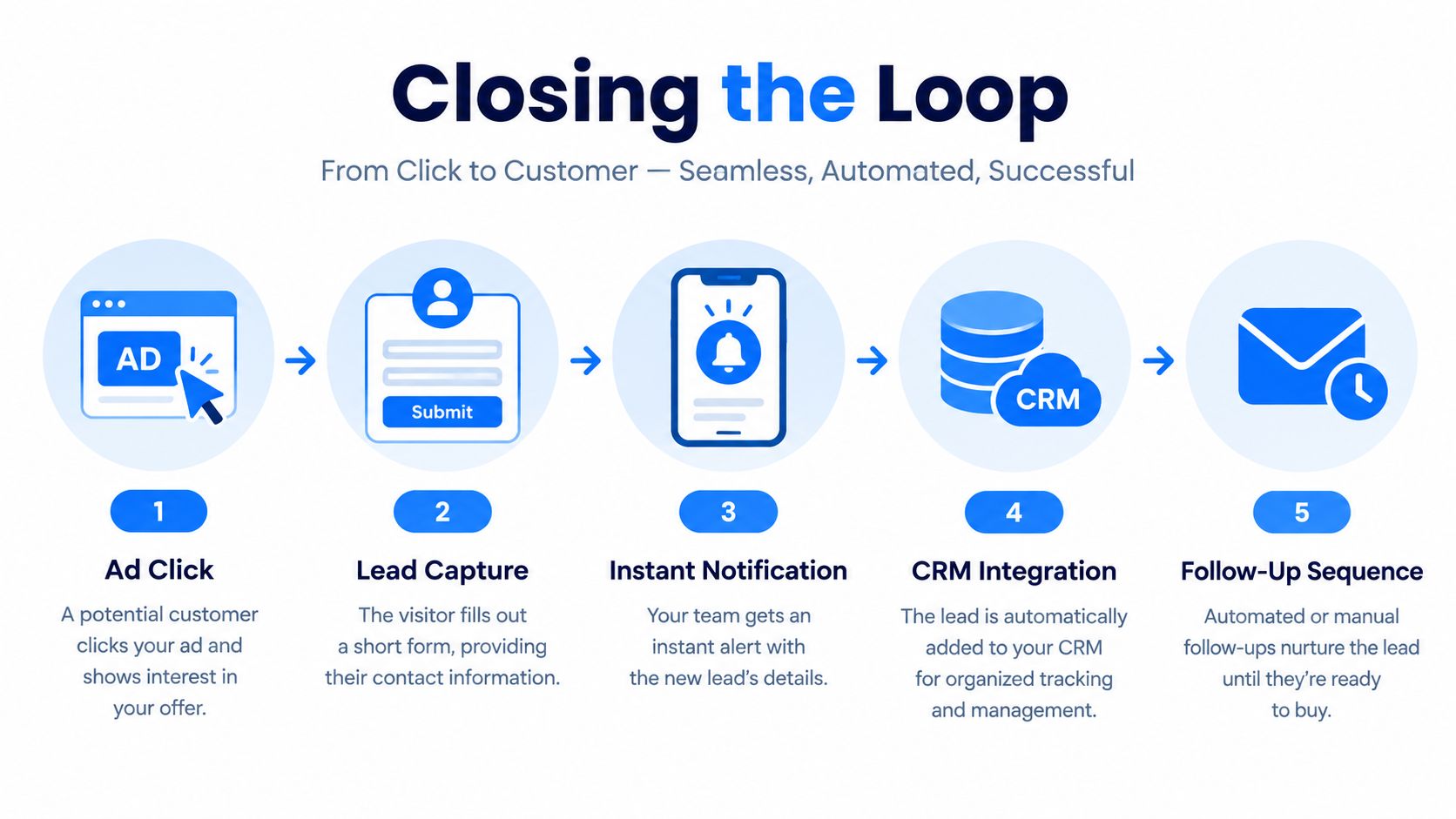
A strong workflow looks like this:
- Lead arrives from the ad or landing page.
- SMS goes out immediately so the prospect knows someone saw the request.
- CRM records the contact with the source attached.
- Follow-up sequence continues by text, email, or voice if needed.
- Outcome data feeds back into the ad system so optimization improves.
The ad is only half the machine. The response process turns attention into revenue.
Full-funnel automation beats basic ad automation. The platform can manage bidding and audience expansion, but the business still needs instant intake, verification, and routing. Without that, the account can still look busy while the calendar stays empty. For the tracking layer, conversion tracking software for lead generation is the part that closes the attribution gap.
Comparing Agencies, DIY Platforms, and Automated Software
Local owners usually face the same three choices. Hire an agency, wrestle with Meta themselves, or use automated software that handles the repetitive work. Each path has a cost, but the bigger difference is how much control the business keeps over creative, launch timing, and follow-up.
What each model actually gives you
Agency
- Cost Structure
- Ongoing retainers and service fees
- Creative & Setup
- The agency handles most of it, but you depend on their process
- Lead Follow-Up
- Often separate from the ad service unless you pay for more
DIY native tools
- Cost Structure
- Low tool cost, high time cost
- Creative & Setup
- You build and manage everything yourself
- Lead Follow-Up
- Usually handled outside the ad platform
Automated software
- Cost Structure
- Platform-based fee model, then workflow automation
- Creative & Setup
- Campaigns, templates, and assets are prepared faster
- Lead Follow-Up
- Built into the same system or tightly connected
DIY native tools give you the most direct control, but they also demand the most expertise. That's fine if you want to live in Ads Manager every day. It's a bad fit if you're running a roofing crew, a dental office, or a cleaning business and don't have time to babysit campaigns.
Agencies remove the learning curve, but they don't remove the dependency. You're still waiting on someone else to make creative changes, shift budgets, or fix tracking. If the agency doesn't own the follow-up process, the ad account can look healthy while the lead pipeline stays weak.
Where software sits in the middle
Automated software is the middle ground when it's built well. It can handle campaign builds, audience setup, reporting, and creative generation, while letting the business approve assets before launch. It also keeps the ad stack and lead follow-up under one roof, which makes it easier to see whether spend is turning into booked work.
The right choice isn't the most autonomous option. It's the one that preserves control where control matters.
That's why a wallet-based software model can make more sense than a full agency relationship for some local businesses. You get the systemized workflow without handing over the whole account. For a deeper look at the lead side of that stack, see lead generation software for local services.
Building Your Full-Funnel Automation Strategy
A local service account should be judged from the first click to the booked appointment. If the campaign gets cheap clicks but weak follow-up, the problem isn't “ads are bad,” it's that the funnel is incomplete. The right automation strategy fixes that by connecting media buying, intake, and CRM outcomes in one operating system.
A practical audit to run this week
Start with the ad account. Ask whether your current setup uses native Meta automation, whether creative is refreshed often enough, and whether campaign rules are doing anything beyond basic budget tweaks. Then move to the response process and check how fast the first message goes out when a lead submits.
Next, inspect tracking. If you're only trusting platform-reported results, you're probably missing part of the picture. Server-side events, client-side events, and CRM outcomes should all point to the same lead record so optimization improves over time.
Finally, test the workflow manually. Submit a lead, time the SMS response, and watch what happens after the first reply. If the process feels slow or fragmented to you, it feels slow to the customer too.
What to keep, what to change
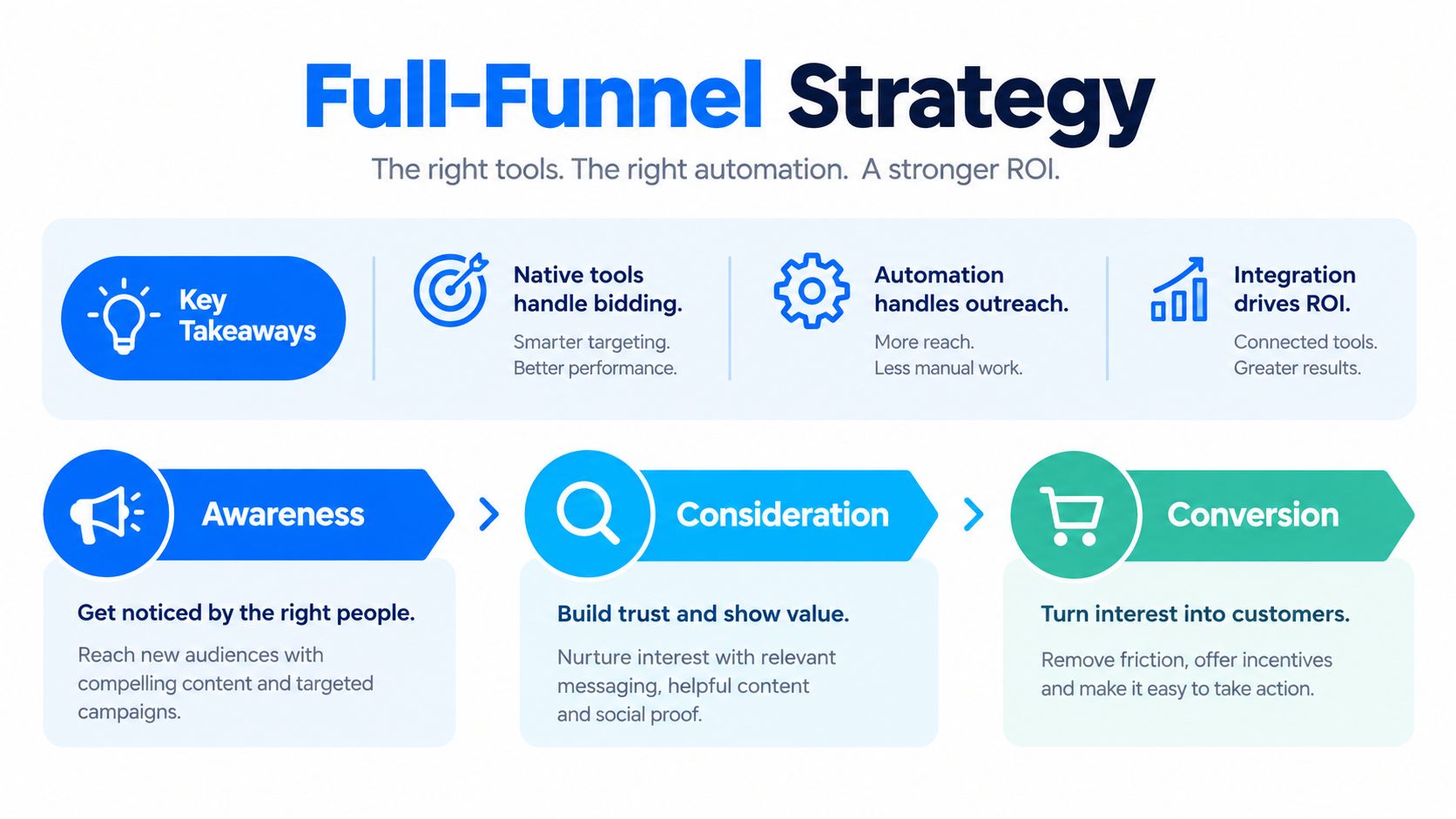
Keep Meta's bidding automation. It's useful. Change anything that leaves the business guessing about creative performance, lead routing, or booked revenue. That's the line between ad automation and full-funnel automation.
The shift is simple. Native tools handle bidding. Dedicated software handles outreach, approval, and follow-up. Integration drives ROI because the whole chain stays visible and measurable.
BenjiAds automates ad creation, landing pages, tracking, and SMS follow-up for local service businesses that want a tighter system around Meta ads. If you want a facebook ads automation tool that connects campaign setup to lead intake and approval-based launch, visit benjiads and see how the workflow fits your business.
- facebook ads automation tool
- meta ads automation
- local business ads
- lead follow-up
- ad campaign management
Done for you
Ads that text you customers.
- ✓ Ads created for you
- ✓ Every lead texts your phone
- ✓ Free to use, no credit card
748+ local businesses run ads with benjiads