online advertising platform 15 min read
Online Advertising Platform: A Local Business Guide
Learn how to choose the right online advertising platform for your local business. Compare Google, Meta, and programmatic options to drive qualified leads.
On this page
- What an Online Advertising Platform Actually Does for Local Businesses
- Google Ads vs Meta Ads vs Programmatic for Local Services
- How Targeting Really Works Across Platforms
- Measurement Mistakes That Waste Local Ad Budgets
- When to Start with One Platform and Add Another
- Real Examples of Platform Choices by Trade
- Why the Cheapest Leads Are Often the Wrong Leads
- Practical Next Steps Before You Launch Any Campaign
Meta often produces lower-cost leads than Google Ads, but the benchmark that matters is downstream: MQL-to-SQL conversion can sit at only 5-10%, while SQL-to-opportunity conversion can land at 25-35%. Final lead quality depends on verification and follow-up systems, not just the platform that reports the cheapest inquiry.
That sounds counterintuitive because low CPL is easy to celebrate. A local plumber can open an ad dashboard, see a promising cost per lead, and still discover that many contacts are unreachable, outside the service area, price shopping, or unable to book. The platform delivered activity. It didn't necessarily deliver revenue.
The commercial history of digital advertising makes this mistake easy to repeat. Online advertising became a mass-market channel after AT&T placed the first clickable banner ad on HotWired on 27 October 1994. Three decades later, U.S. internet advertising revenue reached $294.6 billion in 2025, up 13.9% year over year, according to the U.S. internet advertising revenue report referenced by the Bundeskartellamt.
The platforms are now advanced enough to automate bidding, creative testing, audience selection, and conversion optimization. Your business still has to answer the phone, verify the inquiry, schedule the appointment, and close the job. This guide takes an opinionated position: choose the platform around customer intent, then judge it by verified and bookable outcomes rather than cheap traffic.
What an Online Advertising Platform Actually Does for Local Businesses
A low cost per lead can hide a weak sales pipeline. An online advertising platform connects your offer, audience, ad placement, landing page, conversion event, and follow-up process. It can generate inquiries, but it cannot decide whether those inquiries are genuine, local, reachable, qualified, or ready to book.
That distinction should shape your platform choice. A homeowner searching for an emergency electrician has immediate intent and may call within minutes. Someone watching a landscaping video on Instagram may be discovering the service for a future project. Both actions count as engagement, but they require different campaigns, tracking, and follow-up.

The acquisition loop matters more than the interface
A local campaign needs five connected parts:
- Offer: A specific service, location, availability, or reason to contact you.
- Audience: People searching for that service, browsing relevant content, or matching a useful customer profile.
- Landing experience: A mobile-friendly page that makes calling, texting, or requesting an appointment easy.
- Measurement: Events that separate a form submission from a verified contact, qualified lead, or booked job.
- Follow-up: A prompt call or text sequence that gives a real person the chance to respond.
Break one link and the platform may optimize for the wrong result. A form campaign can find people willing to submit details while your business needs answered calls and scheduled visits. That is the hidden gap between lead volume and revenue.
For an electrician, plumber, HVAC contractor, or dentist, the useful local benchmark is not the cheapest inquiry. It is the share of inquiries that are contactable, inside the service area, qualified for the job, and willing to schedule. Platform choice and tracking maturity matter more than CPL when those outcomes are not connected to campaign reporting.
Practical rule: If your conversion event is “form submitted,” the platform will seek form submitters. If your business needs booked jobs, configure tracking and optimization to reflect verified and bookable outcomes.
Automation can improve bidding, audience selection, and creative delivery. It cannot answer the phone, verify the request, schedule the appointment, or close the job. Give the platform reliable signals, then judge its performance by completed business outcomes rather than dashboard activity.
Google Ads vs Meta Ads vs Programmatic for Local Services
Google Ads is usually the first choice for urgent, intent-led services. A person searching for “blocked drain repair” or “emergency dentist near me” has already identified a problem. Search ads can capture that demand, but only when keyword settings, service areas, landing pages, call tracking, and phone handling are accurate.
Meta Ads is usually stronger for discovery, visual proof, and lead generation. Facebook and Instagram can introduce a landscaping company, salon, chiropractor, or home improvement service before someone searches. Meta may produce cheaper inquiries than Google, but a lower CPL does not prove better revenue. Form friction, qualification questions, creative, and follow-up determine whether an inquiry becomes a verified, bookable lead.
Programmatic advertising is the broadest and most operationally demanding option. It buys display, video, connected TV, audio, and other inventory through automated systems. That reach can support awareness across a local market, but it requires reliable first-party data, disciplined reporting, and enough time to assess results.
The wider market shows why programmatic deserves consideration, not automatic priority. Programmatic advertising was estimated at $651 billion in 2025 and represented more than 82% of digital ad spending. Social media reached $247.3 billion in global ad spend in 2024, surpassing paid search, according to Clutch's digital advertising summary. Market size does not determine the right channel for a plumber, electrician, HVAC contractor, or dentist.
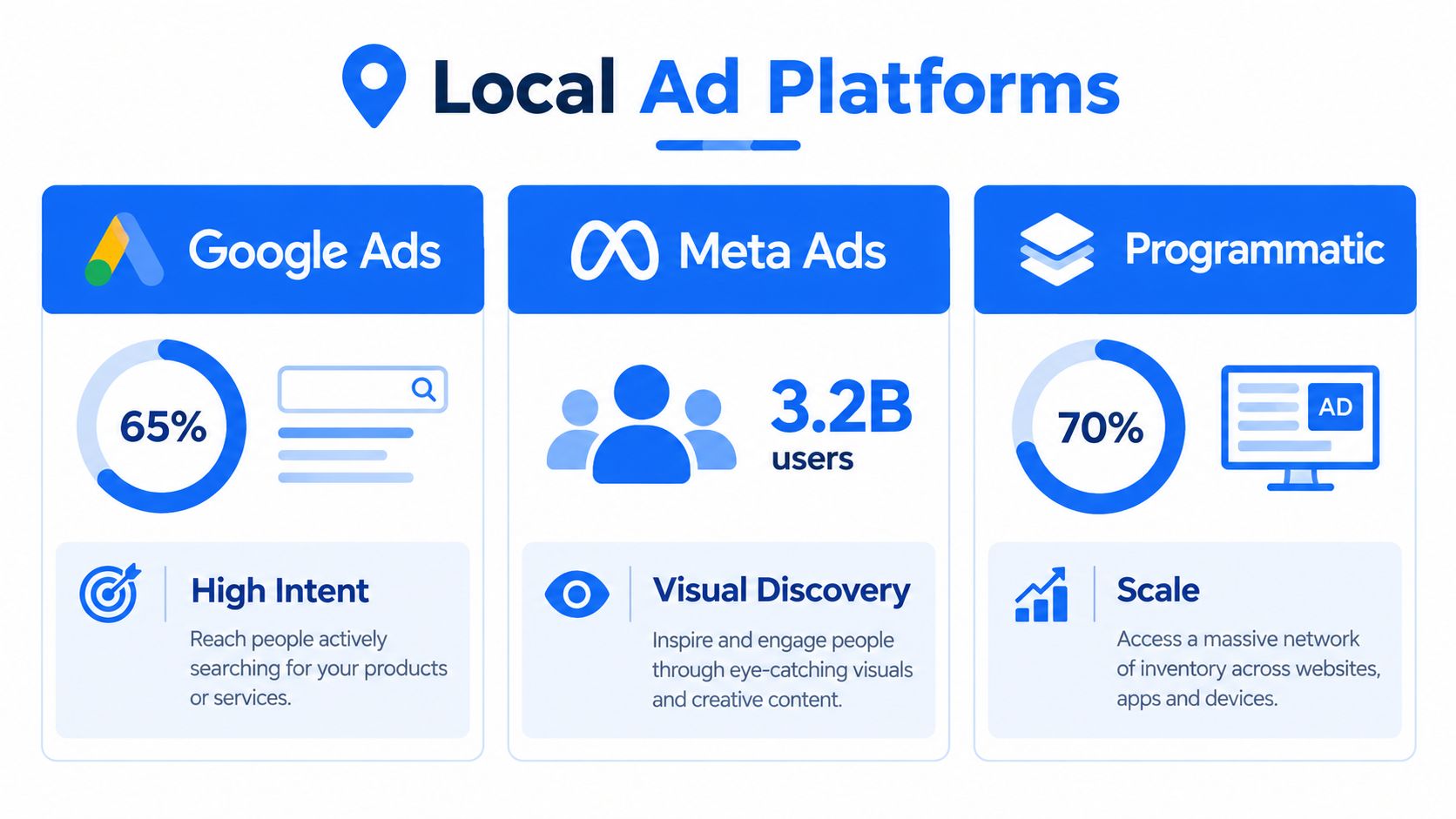
| Platform | Best For | Typical Local Fit |
|---|---|---|
| Google Ads | Capturing active demand | Emergency work, repairs, consultations, and local searches |
| Meta Ads | Creating demand and generating inquiries | Visual services, promotions, seasonal work, and appointment offers |
| Programmatic | Extending reach across inventory | Brand awareness, retargeting, and broader market coverage |
Choose Google first when a missed call can represent an immediate job. Choose Meta first when customers need to see results, testimonials, offers, or a recognizable local brand before contacting you. Add programmatic later unless you have reliable tracking and a clear business reason to buy reach beyond search and social.
The right comparison is verified, bookable leads, not lead volume. For a deeper channel comparison, read this guide to Google Ads versus Meta Ads. Start with one primary channel, then add another after reporting connects ad spend to contactable prospects, qualified requests, and scheduled work.
How Targeting Really Works Across Platforms
A platform can produce a full lead form and still deliver little work. Targeting determines who sees the ad, but signal quality determines whether those people become verified contacts, completed conversations, and bookable appointments. For a local service business, that gap matters more than a low cost per lead.
Google works from expressed intent. The search query, service category, location, device, schedule, and landing page help define the opportunity. Tight geographic boundaries and negative keyword controls often outperform broad audience expansion because they keep spend near people with a current need. A person searching for your service is usually a stronger starting signal than someone who merely matches an interest category.
Meta relies more on discovery signals. Its system learns from engagement, customer lists, conversion events, creative response, and audience patterns. It can find people similar to previous customers, but the advertisement must create the reason to act. Before-and-after work, a clear service area, credible proof, and a direct appointment offer give the platform stronger responses to learn from than a generic brand message.
Programmatic buying adds contextual and audience-layer targeting across publishers and formats. That reach can support awareness or remarketing, but it requires dependable feedback. Delayed, vague, or missing conversion signals leave automated buying unable to separate a valuable visitor from an accidental impression. Use it after your business can identify which contacts are verified and which appointments are bookable.
The buying situation should determine the signal mix. An Immediate problem calls for search intent, local geography, call assets, and a landing page built for fast action. A Considered service needs visual creative, proof of quality, useful education, and a simple inquiry path. Repeat or seasonal demand can use customer lists, remarketing, and timely offers, with exclusions for people who already booked.
Mobile behavior changes the practical setup. The phone number, click-to-call action, form, and page speed must work without a desktop. A polished desktop page cannot recover a campaign when a customer cannot request help from a phone during an urgent situation.
Audience freshness affects delivery quality. A recently verified customer list may outperform a broad interest category, while an old or incomplete list can distort lookalike modeling. Keep service boundaries explicit. Out-of-area leads can increase dashboard volume while lowering the share of contacts your team can serve.
Use a local benchmark that follows the customer path, not just the platform count: inquiry received, contact verified, conversation completed, and appointment booked. If a channel generates volume but fails between those stages, change its targeting or tracking before increasing spend.
Remarketing should have a defined job and an exclusion rule. This guide to remarketing ads on Google explains how to bring previous visitors back without treating every visitor as equally valuable.
Measurement Mistakes That Waste Local Ad Budgets
Cheap reported conversions can hide an expensive sales problem. A local business may receive plenty of leads while gaining few verified contacts, completed conversations, or bookable appointments. Platform choice matters, but tracking maturity determines whether you can see that gap.
Meta's commonly described default attribution setting uses a 7-day click and 1-day view window. A conversion may receive credit after a click or an ad view, even if the person never clicked. That can make performance appear stronger than a strict last-click or CRM-reconciled view. The attribution explanation and cross-channel comparison are covered in this analysis of Meta Ads and Google Ads attribution, which also presents illustrative capture ranges for different tracking setups.
Build measurement around your sales process
Set the reporting sequence around what the owner needs to know:
- Inquiry received: A form, call, message, or chat arrives.
- Contact verified: The phone number or contact details are usable.
- Conversation completed: Someone at the business reaches the person.
- Appointment booked: The prospect accepts a time or service slot.
- Revenue recognized: The job is completed or the sale closes.
A campaign can look efficient at the first stage and fail at the fourth. Track movement between these events by channel, campaign, and creative. Call records, CRM stages, booking software, and revenue data should challenge the ad dashboard whenever the reported conversions do not become reachable prospects or booked work.
For local service businesses, compare channels by verified and bookable leads, not CPL alone. A higher-cost lead source can produce more revenue if its contacts answer, fit the service area, and schedule work. A low-CPL source can waste budget when its volume consists of unreachable, irrelevant, or duplicate inquiries.
Server-side tracking provides a stronger first-party path, as explained in this benefits of server-side tracking guide. It sends conversion events from your server directly to the ad platform, reducing dependence on browser cookies and client-side scripts. An event may include an event ID, timestamp, conversion value, and hashed email or phone identifiers, helping the platform match the conversion to the original interaction.
The server-side tracking overview from Cometly explains how this setup can improve event completeness and optimization signals, particularly in iOS and consent-restricted environments. Use client-side and server-side tracking together where appropriate, then deduplicate events so one booking does not become two conversions.
| Tracking Method | Expected Capture | Best Use Case |
|---|---|---|
| Pixel-only measurement | About 60-70% of conversions in modern web environments | Basic setup when implementation time is limited |
| Browser pixel plus server-side events | Roughly 85-95% observed capture | Campaign optimization and more complete conversion reporting |
These ranges are illustrative, not guarantees. Consent status, implementation quality, deduplication, event matching, and customer behavior affect the result.
Measurement standard: Scale only when verified contacts, answered calls, booked appointments, and revenue support the decision.
For local campaigns, dual tracking protects optimization from incomplete signals and gives the owner a clearer view of what the budget purchased. Fix the measurement gap before increasing spend.
When to Start with One Platform and Add Another
Running Google, Meta, and programmatic campaigns at once sounds diversified. For a small local business, it often creates three incomplete experiments, scattered attention, and no reliable answer about which channel produces jobs.
Start with one primary platform that matches the strongest customer signal. An emergency plumber should usually begin with active search demand. A salon promoting a visual transformation may begin with Meta. A local service with a mature customer database and clear awareness objective can consider broader buying later.
Use a staged launch
Stage one is control. Define one business outcome, one service area, one offer, and one conversion path. Prepare the ads, landing page, phone or form handling, and reporting before any money moves. Keep the campaign paused until the owner approves the message, locations, budget, and schedule.
Stage two is verification. Watch whether inquiries are real, contactable, and relevant. Review missed calls and response delays daily. If your staff can't handle the first channel's leads, another platform will create a larger operational problem, not a marketing solution.
Stage three is expansion. Add a supporting channel only when the primary funnel has stable tracking and a repeatable follow-up process. The second platform should have a defined job, such as remarketing to visitors, promoting seasonal work, or creating awareness for a service people don't search for frequently.
Daily reporting should use plain business language. Show spend, inquiries, verified contacts, answered calls, booked appointments, and closed jobs. Don't let an automated bid strategy make strategic decisions before your team has confirmed that the underlying conversion events mean what they claim.
Approval controls protect small budgets. Automation should prepare and optimize the work, not remove the owner from the decision to spend.
Real Examples of Platform Choices by Trade
An emergency plumber and a garden designer may both serve the same city, yet they shouldn't buy attention the same way.
Electrician, plumber, and HVAC contractor
An electrician handling urgent faults should prioritize search queries tied to immediate service needs, a click-to-call route, and a page that states service boundaries clearly. The landing experience should answer practical questions quickly: what work is covered, where the team operates, and how a customer gets a response.
A plumber can use the same intent-led foundation, but the qualification process may need to separate emergencies from planned repairs. A short form can ask about the problem and location, while phone tracking shows whether the business answered. The platform's job is to find the opportunity. The contractor's job is to respond while the problem is still active.
An HVAC company can combine search with seasonal Meta creative. Search captures people looking for repair or replacement help. Meta can show maintenance reminders, installation imagery, or customer-friendly explanations before the next urgent failure.
Salon, chiropractor, and dentist
A salon benefits from visual proof, clear availability, and an appointment path that works on mobile. Meta can introduce a treatment or seasonal offer to people who weren't actively searching, but the creative must make the next action obvious.
A chiropractor may need educational content and a low-friction consultation request. The campaign should qualify the service needed without making the first form feel like a medical questionnaire. Follow-up should move quickly from inquiry to conversation.
A dentist often combines intent and trust. Search can capture people seeking a nearby appointment, while social creative can reinforce atmosphere, services, and patient confidence. The landing page should support booking, not bury the phone number beneath generic brand copy.
A platform doesn't fix a weak offer or a missed call. It only sends more people into the process you built.
Higher-value services can often tolerate more expensive intent traffic than low-ticket services, but the calculation must use the full path to revenue. A cheap inquiry that never answers is not cheaper than a qualified booking. Compare each trade's verified contact rate, appointment rate, and closed-won outcome before changing bids.
Why the Cheapest Leads Are Often the Wrong Leads
The cheapest lead can become the most expensive job to acquire. CPL measures the platform's cost to generate an inquiry. It does not confirm that the person is real, nearby, reachable, looking for your service, or ready to book.
The gap appears after the form submission. Independent B2B PPC benchmarks report MQL-to-SQL conversion rates of only 5-10% and SQL-to-opportunity rates of 25-35%, as documented in The Digital Bloom's lead quality report. Local service funnels do not follow the same sales process, but the warning applies. Inquiry volume can fall sharply as each lead is verified, contacted, qualified, scheduled, and converted.
Set a platform scorecard around the outcomes that produce revenue:
Verified lead rate confirms that the supplied contact details work. Answer rate shows whether the prospect responds to a call or text. Qualified rate measures fit with your service and location. Booking rate records accepted appointments. Closed-won rate shows whether those appointments create revenue.
Use these benchmarks to judge platform choice, not CPL alone. Meta may deliver a lower CPC or CPL, while Google produces stronger intent for an urgent trade. Meta can win for a visual service when the creative persuades and follow-up is fast. The platform is only as good as the tracking and response process behind it.
The useful comparison is cost per verified, bookable opportunity, then revenue per closed job. If those figures are unavailable, reconcile calls and CRM records before changing bids or naming a winner.
Practical Next Steps Before You Launch Any Campaign
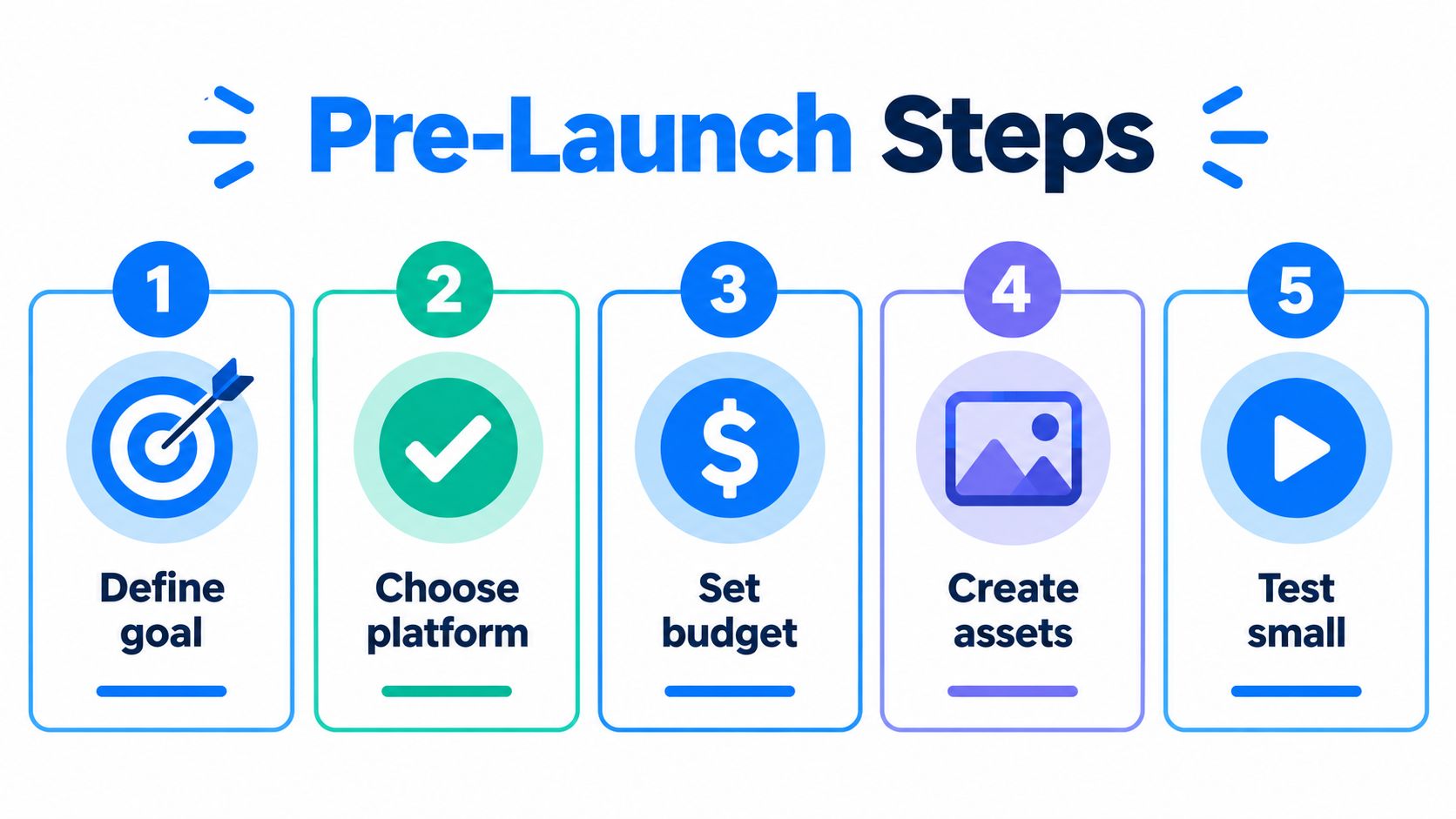
Treat launch as a controlled operating process, not a button press.
- Define the outcome: Choose booked jobs, appointments, or qualified calls, not vague awareness.
- Select one primary platform: Match the channel to urgent search intent, visual discovery, or a clearly defined reach objective.
- Install dual tracking: Connect browser and server-side events, then check for duplicate conversions.
- Build the funnel: Use a branded landing page, one clear offer, a visible phone option, and a short form.
- Prepare follow-up: Decide who answers, how quickly they respond, and how missed inquiries are recovered.
- Approve before spending: Review locations, creative, budget, targeting, and conversion definitions.
- Report downstream results: Separate inquiries from verified contacts, booked appointments, and closed work.
BenjiAds offers local businesses a software workflow for ad creation, campaign setup, branded landing funnels, server-side and client-side tracking, SMS-based lead intake, follow-up, approval controls, and plain-language reporting. If you want those pieces connected before you spend, visit benjiads and review how the platform can support a measurable local acquisition process.
- online advertising platform
- local advertising
- google ads
- meta ads
- digital marketing
Done for you
Ads that text you customers.
- ✓ Ads created for you
- ✓ Every lead texts your phone
- ✓ Free to use, no credit card
748+ local businesses run ads with benjiads