lead generation plumbing 13 min read
Lead Generation Plumbing: How-to Guide
Master lead generation plumbing for your plumbing business. Step-by-step strategies for ads, funnels, and follow-up to book more jobs.
On this page
A 2026 home-services benchmark found that 38% of calls answered by a person are genuine leads, and 45% of those leads convert during the call, based on an analysis of more than 70 million calls in the Invoca Home Services Lead Conversion Benchmarks Report. For a plumbing company, that changes the question completely.
The problem usually isn't getting the phone to ring. It's what happens after the ring, when you're under a sink, driving between jobs, or already speaking with another customer. Lead generation plumbing is the system that moves an inquiry from ad click or missed call to a qualified conversation, booked appointment, and profitable job.
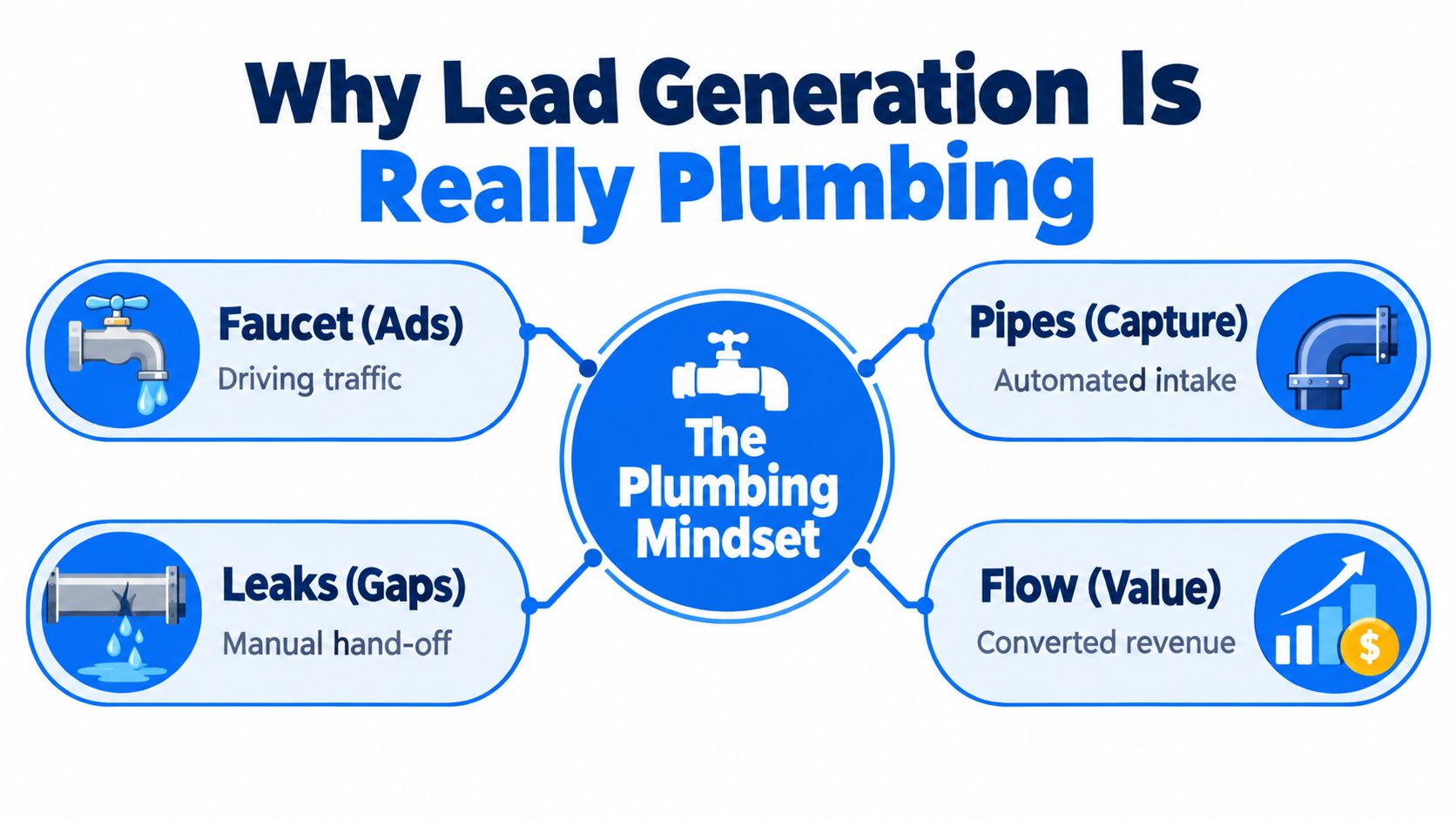
Ads are only the faucet. Your landing pages, call routing, SMS replies, qualification questions, tracking, and dispatch process are the pipes. If those pipes leak, buying more traffic only sends more water onto the floor.
Why Lead Generation Is Really Plumbing
A benchmark built from more than 70 million calls offers a useful operational lesson for plumbing companies: buying attention is only the first stage. The test is whether an inquiry reaches a person, receives a useful response, and turns into scheduled work.
The right question is not, “How many leads did our ads produce?” Ask instead: how many genuine opportunities entered the system, how quickly did someone take ownership, and where did each opportunity end up?
That benchmark gives local service operators a practical way to inspect the flow. It does not mean every plumbing call follows one pattern. A blocked drain, leaking water heater, and full emergency replacement involve different urgency, expectations, and job values. The common point is that a caller has already moved beyond awareness. Availability, trust, diagnosis, and scheduling now decide whether the opportunity keeps moving.
Because a substantial share of qualified callers can make a decision during the conversation, the first minute of that exchange may be worth more than another week of ad adjustments. A strong ad can open the faucet. It cannot answer a missed call, route a form, or give a homeowner a clear next step.
The faucet is only the beginning
Paid search, social advertising, local listings, and SEO create entry points. They do not guarantee that someone answers, that a caller receives a useful response, or that the inquiry reaches the right person.
A plumbing funnel has several working parts:
- Faucet, advertising: It creates demand and directs people to a phone number or landing page.
- Pipes, capture: Forms, click-to-call buttons, tracking numbers, and SMS intake collect the inquiry.
- Valves, qualification: The system records the service needed, location, urgency, and preferred contact method.
- Leaks, operational gaps: Voicemail, delayed callbacks, unread texts, incomplete forms, and unclear ownership drain opportunity.
- Flow, revenue: A qualified lead reaches the right human, receives a clear next step, and becomes a scheduled job.
The trade-off is straightforward. More ad spend can increase volume, but it cannot repair a slow or ownerless response process. A smaller campaign with reliable capture and follow-up can outperform a larger campaign that overwhelms the person answering it.
Practical rule: Do not scale traffic until you can account for every call, form submission, and text after it arrives.
The High Cost of Manual Lead Handling
Manual follow-up breaks down for ordinary operational reasons. A technician is in a crawl space, a dispatcher is helping another customer, or the owner notices a form alert after a long day. By then, the homeowner may already have booked another plumber.
Urgent plumbing exposes the weakness fastest. A customer dealing with spreading water, an unusable toilet, or a failed system wants a credible response and a clear next step. They are not patiently comparing providers for a future project. Every unanswered call, unread text, and unassigned form creates another opening for a competitor.
Response-time research consistently shows that the first minutes after an inquiry influence the outcome far more than later funnel activity. The problem is operational: paid traffic can arrive, but manual handling leaves too many opportunities sitting in voicemail, inboxes, and personal to-do lists.
Busy doesn't mean profitable
A manual process often produces this customer experience:
| Manual approach | What the customer experiences | Business consequence |
|---|---|---|
| Shared office phone | The call reaches voicemail or rings while staff are occupied | The customer tries another plumber |
| Email-only form alerts | The inquiry waits for someone to check an inbox | The lead loses urgency |
| Individual callbacks | Each employee follows a different process | Follow-up quality varies |
| Spreadsheet tracking | Status updates depend on memory | Leads disappear between hand-offs |
| Ad reporting by clicks | Marketing gets credit for traffic | Booked-job performance stays unclear |
A full schedule does not automatically mean a healthy pipeline. Staff can remain busy with callbacks, inbox checks, duplicate data entry, and status searches while profitable jobs still leak away. If the business pays to create demand but cannot manage what arrives, advertising feeds a blocked process.
The trade-off is practical. More traffic increases the number of leads entering the system, but it also increases the workload when ownership and follow-up rules are unclear. A smaller campaign with consistent handling may produce more booked work than a larger campaign that the team cannot process reliably.
Where leads usually leak
Audit the first hand-off before changing ad creative. Who owns a missed call? Who sees a form submitted outside office hours? What message does the homeowner receive after requesting help? Can the dispatcher distinguish an emergency from a routine repair or an estimate request?
The plumbing lead-generation guidance from Thryv emphasizes rapid response and missed-call recovery because these tasks connect acquisition with sales. Automation should acknowledge the inquiry, route it to the right person, send reminders, and record the status. People can then focus on diagnosis, trust, and booking the job.
The goal is not to remove the plumber or dispatcher from the process. It is to stop routine hand-offs from depending on memory, availability, or a single person checking the inbox.

Building an Automated Capture System
A working capture system should accept a lead whether the homeowner calls, submits a form, or starts a text conversation. The tools can differ, but the sequence needs to stay consistent.
Start with one clear destination
Send each campaign to a dedicated landing page rather than a generic homepage. The page should match the problem in the ad, show the service area, explain the next step, and make the phone number easy to tap on a mobile device.
Keep the form focused. Ask for the information the dispatcher needs to act:
- Service problem: Drain blockage, leak, water heater issue, sewer concern, or another category.
- Location: Address or service area, so the team can confirm coverage.
- Urgency: Immediate assistance, scheduled repair, or estimate.
- Contact details: A verified phone number and a usable name.
A long form may collect more fields, but it can also create friction when the customer is stressed. The right balance depends on the service and the team's capacity. Capture enough information to route the request, then let a person gather technical details during the conversation.
Make the first response automatic
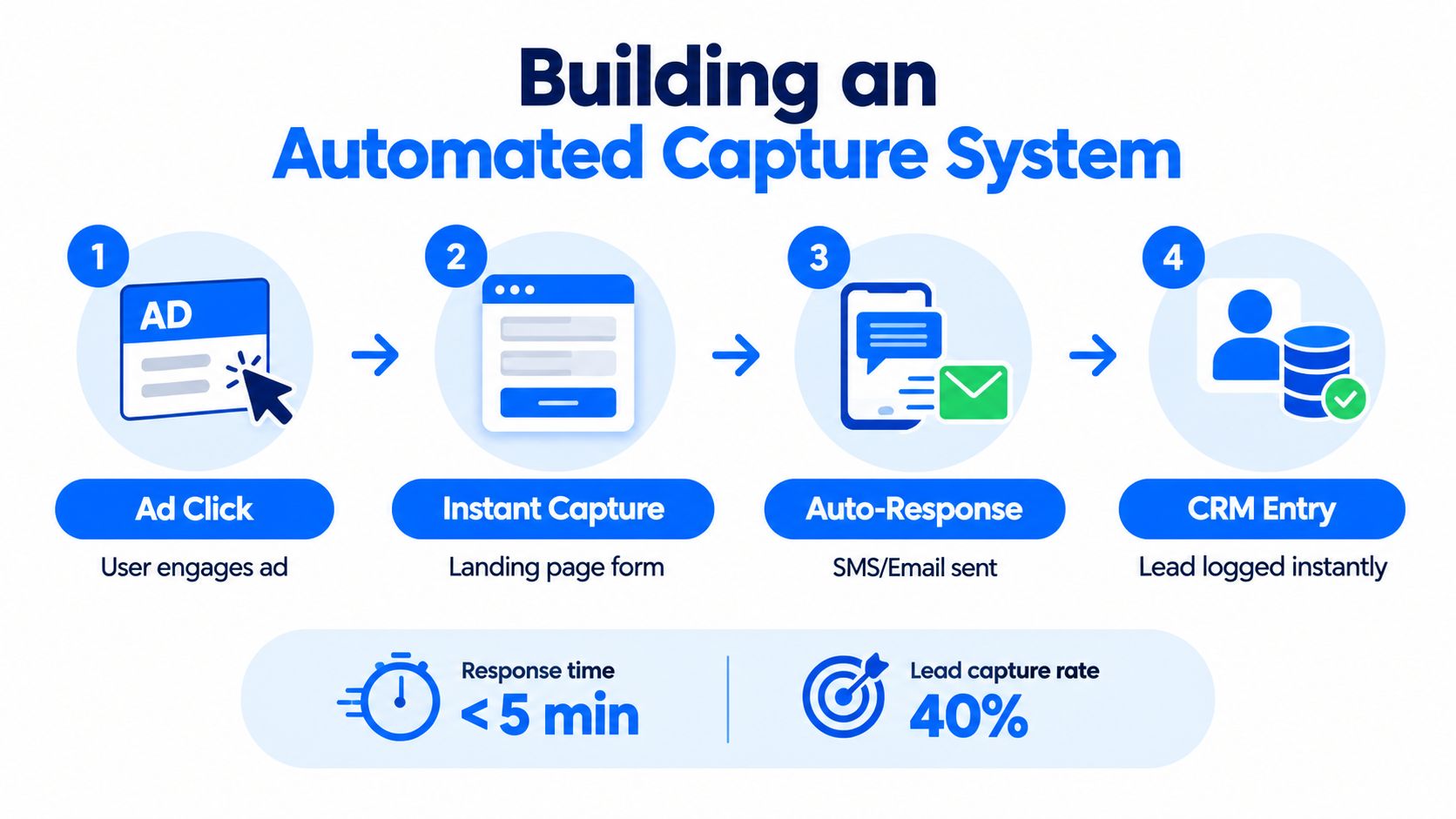
After submission, the system should acknowledge the inquiry immediately. An SMS can confirm receipt, ask a simple qualifying question, and explain when a team member will respond. If a call is missed, a text-back can provide the same reassurance without pretending that a plumber is already on the way.
Phone verification helps separate reachable prospects from obvious junk entries. A CRM entry should record the source, service category, timestamp, response status, and assigned owner. That record gives the dispatcher context before calling and gives the owner a reliable trail for later reporting.
The process can be built with separate tools, such as a landing-page platform, Twilio, a CRM, and an ad tracker. A unified option such as BenjiAds' automated marketing platform combines ad creation, landing funnels, tracking, and SMS-based intake for local-service campaigns. The important decision isn't choosing the most fashionable software. It's making sure the hand-offs happen without relying on one busy person remembering each step.
Design for human takeover
Automation shouldn't diagnose a complex plumbing failure or promise an arrival time the team can't meet. It should collect context, acknowledge the customer, route the inquiry, and alert the right person.
Set clear boundaries:
- Immediate acknowledgement: Confirm that the request arrived.
- Qualification: Ask only questions that affect urgency or routing.
- Human escalation: Notify a dispatcher when the lead needs judgment.
- Persistent follow-up: Continue reasonable reminders if the customer doesn't respond.
- Clean closure: Mark the lead booked, lost, unqualified, or needing future contact.
That structure lets the system work after hours without creating false expectations. It also gives the team a consistent process when the day gets messy.
The Critical 5-Minute Rule
A plumbing lead can cool off in minutes. The first few moments after an inquiry are when the homeowner is actively looking for help. By the time someone responds later, the customer may have called another company, found a temporary fix, or postponed the job. Response speed is often the bottleneck in lead generation plumbing, not the ad creative that produced the inquiry.
The benchmark cited by LeadRecover's 2026 report states that responding within 5 minutes can make conversion nine times higher than responding at 30 minutes. It also reports that waiting more than 1 hour can cut close rate by 50%, while 37% of inbound calls go unanswered during business hours. Those figures turn speed into an operating requirement. Buying more traffic does little if the follow-up pipes are blocked.
A practical example makes the window clear. A homeowner submits a form at 7:42 p.m. and receives an acknowledgement text at 7:43 p.m. The request is still active, and the customer has a reason to reply. If the first response arrives at 8:40 p.m., that same homeowner may already have called two other companies.
A separate InsideSales analysis examined 55 million sales activities across 5.7 million inbound leads at more than 400 companies. It found that 57.1% of first call attempts occurred more than a week after inquiry, and reported that conversion rates dropped by eight times after the first 5 minutes. Its recommendations include instant routing, a first-touch SMS or email, and repeated attempts governed by a five-minute service-level agreement.
What the first five minutes should contain
The first response should be fast, relevant, and honest.
- Acknowledge the request: Confirm that the business received the call or form.
- Confirm the need: Ask whether the issue is an active emergency or planned service.
- Capture the location: Check that the property is inside the service area.
- Offer a next action: Provide a callback, booking route, or dispatcher contact.
- Create accountability: Assign an owner and record the lead status.
A missed-call text can explain that the team could not answer, invite the customer to reply with the problem and address, and promise human follow-up. It should not promise availability before a dispatcher confirms it.
Build around failure, not ideal conditions
Real plumbing businesses miss calls. Dispatchers get interrupted, technicians lose signal, and after-hours inquiries arrive when the office is closed. The workflow must keep moving during those gaps.
Use automation for predictable failures:
- A missed call triggers a text.
- A form submission creates a task.
- An unanswered text prompts a measured reminder.
- An urgent selection alerts the on-call person.
- A duplicate inquiry updates the existing record.
The speed-to-lead guidance from BenjiAds provides a practical checklist for this setup. If your team can't respond manually inside five minutes, the system needs to respond for them.
Integrating Ads with Follow-Up Workflows
An ad campaign shouldn't end at the click. It should carry a source label into the landing page, phone system, CRM, and booking report. Otherwise, you can see which campaign generated traffic but not which campaign generated work.
Begin with one service and one market. Give the campaign a dedicated page, a distinct tracking path, and a clear conversion event. For phone leads, that event may be a connected call that reaches the dispatch team. For forms, it may be a verified submission followed by a human conversation. For booked jobs, the dispatch system needs a status that can be matched back to the original source.
Track the outcome, not just the activity
Clicks and form fills are useful diagnostics, but they aren't the final business result. A campaign that produces many inquiries can still underperform if the leads are outside the service area, asking for work you don't offer, or arriving when no one can respond.
Build a simple status chain:
New → Contacted → Qualified → Booked → Completed → Lost
Record the reason when a lead is lost. Common categories include no answer, outside area, price concern, duplicate request, wrong service, or customer chose another provider. Those labels help separate an advertising problem from a follow-up problem.
For local search campaigns, Google Ads for local businesses can be connected to conversion tracking and campaign-level reporting. Use server-side and client-side signals where appropriate, then compare platform conversions with your own booked-job records. No tracking setup is perfect, so the owner should review both sources rather than trusting a single dashboard blindly.
Keep control over campaign changes
Automation saves time, but it shouldn't remove operational judgment. An approval workflow lets the system prepare ad copy, images, audiences, landing pages, and follow-up sequences while keeping campaigns paused until someone checks the service claims, phone number, location, and offer.
That review matters for plumbing. An ad for emergency response can create the wrong expectation if the team only handles scheduled work. A promotion can also attract jobs that don't fit the company's equipment or margin requirements.
The workflow should make approval easy:
- Review the promise: Does the ad describe an actual service?
- Check the destination: Does the landing page match the search intent?
- Confirm the route: Will the call or form reach the right person?
- Test the message: Does the SMS sound human and set accurate expectations?
- Verify the measurement: Can the team identify the source and final outcome?
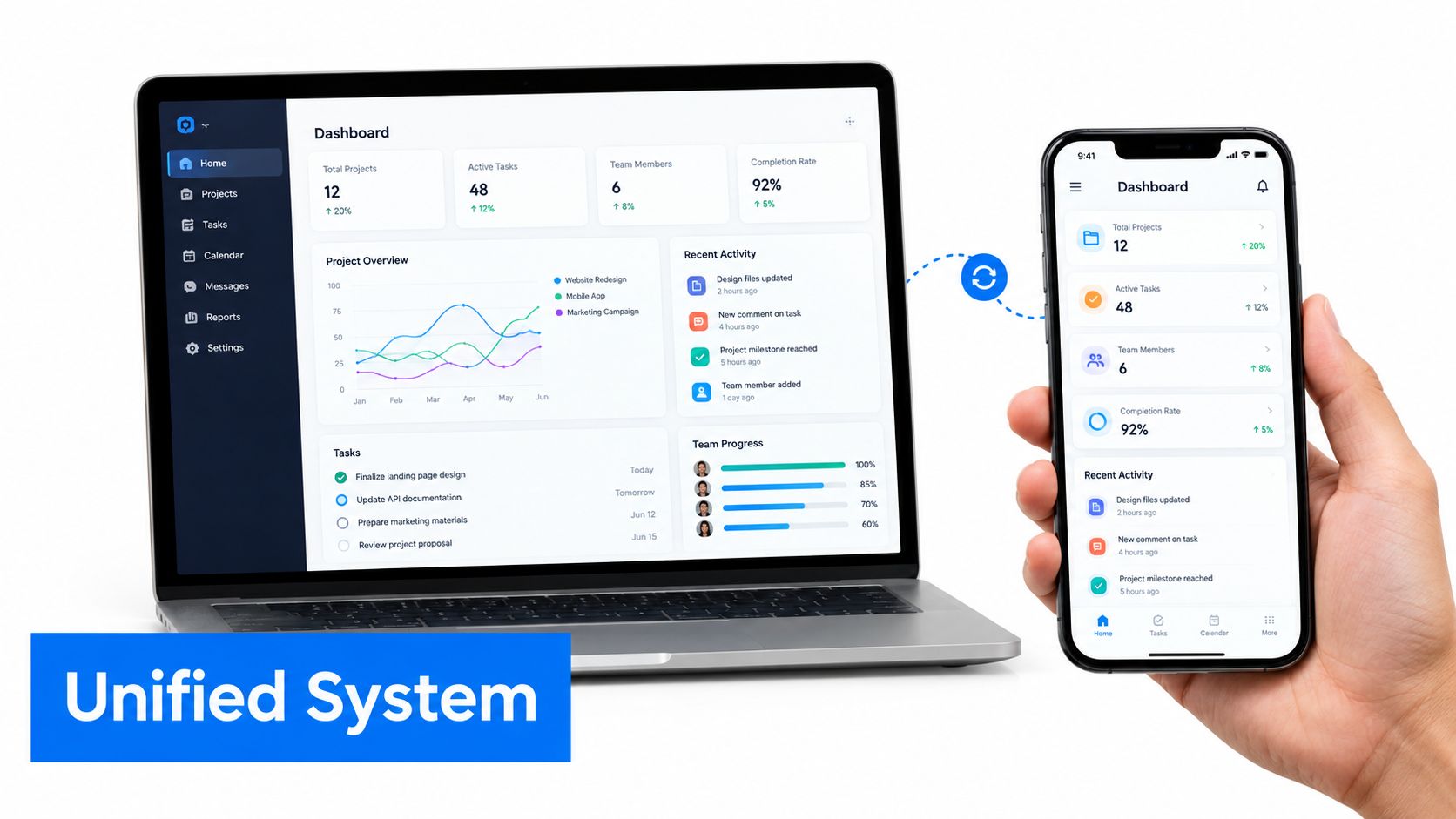
A dashboard becomes valuable when it connects these pieces. Watch this short overview before choosing which parts of your process should be automated.
The trade-off is control versus convenience. Fully manual campaign management offers granular decisions but demands constant attention. Fully automatic changes may move faster but can create mismatched offers or poor-quality inquiries. Approval-based automation gives a plumbing business speed without surrendering the final say.
Measuring Success and Scaling Up
A sound lead-generation system reports cost per lead, cost per booked job, response time, lead quality, and booking status. Review those figures by service and source, not just as one blended account total. If calls rise but booked work doesn't, inspect the response pipe before increasing ad spend.
Scale only after the team can explain where leads go, who owns them, and why opportunities are won or lost. The right mental model is simple: capture demand, respond quickly, qualify carefully, and measure revenue at the end of the pipe.
BenjiAds builds and manages advertising, landing funnels, conversion tracking, and SMS-based lead follow-up for local service businesses, with campaigns held for approval before they run. If missed calls and delayed callbacks are costing your plumbing company work, visit benjiads and review how the system can connect your ads to a faster lead-response workflow.
- lead generation plumbing
- plumbing marketing
- lead follow-up
- local service ads
GET A CLOGGED SINK QUOTE BY TEXT
Get a clogged sink quote by text
Free estimates
Ads created · live on FB & IG
For plumbers
Your plumber ads, live in 2 minutes.
- ✓ Ads created for you
- ✓ Every lead texts your phone
- ✓ Free to use, no credit card
748+ local businesses run ads with benjiads