ai in advertising examples 19 min read
10 AI in Advertising Examples for Local Businesses
Explore 10 ai in advertising examples, from creative generation and bidding to personalization and SMS follow-up for local service businesses.
On this page
- 1. AI-Generated Ad Copy and Creative Optimization
- 2. Predictive Lead Scoring and Qualification
- 3. Audience Segmentation and Lookalike Modeling
- 4. Real-Time Bid Optimization and Budget Allocation
- 5. Conversational AI and Chatbot Lead Qualification
- 6. Dynamic Landing Page Personalization
- 7. Predictive Attribution and Multi-Touch Modeling
- 8. Automated SMS and Follow-Up Sequence Optimization
- 9. Seasonal and Demand Forecasting for Campaign Planning
- 10. Competitive Intelligence and Dynamic Pricing Strategy
- AI in Advertising, 10 Use Cases Comparison
- Turn These AI Advertising Examples Into a Controlled Test Plan
AI advertising isn't just writing ads faster. In local service marketing, it's becoming a connected operating system that can generate trade-specific creative, find likely buyers, shift spend, personalize landing pages, measure the path to a booked job, and push leads into SMS follow-up before a competitor answers the phone. That matters because adoption is already moving inside daily work, with IAB Europe and Microsoft reporting that 38% of respondents said generative AI was becoming embedded in their work lives, while 78% pointed to operational efficiency as the main driver of adoption, and 57% cited cost efficiencies Kantar's summary of the 2024 survey.
For plumbers, electricians, landscapers, HVAC contractors, dentists, and home repair teams, the question isn't whether AI can make a flashy ad. It's whether it can reduce wasted spend, improve lead quality, and keep follow-up tight enough to turn attention into appointments. BenjiAds fits naturally into that workflow because it sits where local service businesses need control most, at the junction of ad creative, landing pages, tracking, and SMS follow-up, with approval still in the business owner's hands.
1. AI-Generated Ad Copy and Creative Optimization
AI copy tools are the most visible entry point because they remove the blank-page problem. For a local plumber, that can mean turning “emergency leak repair” into several versions of headlines, descriptions, and image angles that speak to urgency, trust, and speed without forcing a designer to start from scratch. In the local-service funnel, this sits at the top, before traffic, but it affects everything downstream because weak creative starves the rest of the system.
A useful way to think about it is options versus decisions. AI is strong at producing options, for example ad copy variations for a burst pipe, a water heater replacement, or same-day drain clearing, but a human still has to decide which promise is accurate, on-brand, and legally safe. BenjiAds' AI ad creative generator is relevant here because it automates the first draft work for local trades while leaving approval in place.
Practical rule: let AI generate trade-specific variants, then approve only the versions that match the service area, job type, and response promise you can actually deliver.
A simple control for plumbers or HVAC shops is to keep a short brand sheet with approved service terms, excluded claims, and emergency wording. Then compare creative by lead quality, not just clicks, because a clever headline that attracts tire kickers can look good in platform metrics and still waste dispatch time.
- Replicable tactic: feed the model your top three jobs, your service area, and one proof point such as licensed, same-day, or family-owned.
- Control to watch: check whether the copy creates false urgency or overpromises response time.
- Measurement to use: compare booked jobs and phone-verified leads, not just ad engagement.
For electricians and home repair businesses, that discipline matters even more because the service promise often depends on availability, geography, and urgency. AI can speed creative production, but the business still has to own the message.
2. Predictive Lead Scoring and Qualification
Lead scoring is where AI starts helping after the click. Instead of treating every form submission as equal, the system can rank leads by behavior, source, and intent so the office team calls the hottest prospects first. For a local service company, that matters because a homeowner asking for a quote on a broken furnace is not the same as someone casually browsing maintenance options.
The strongest use case is triage. A dental office can prioritize a patient booking a procedure over someone asking for hours, while a landscaping business can separate a spring redesign inquiry from a low-intent price shopper. The AI does not replace qualification, it speeds the first pass so humans spend time where the chance of revenue is higher.
Treat lead scoring as a queue management tool, not a truth machine. If your close rate changes by season or neighborhood, the model has to be reviewed against actual booked work.
That's especially useful for local-service SMS follow-up, because reps can send immediate callbacks to leads that score high and let lower-priority inquiries enter a lighter nurture path. The control is simple, but important, score against your own closed jobs, not just against form fills. A score model that never learns from booked appointments will optimize the wrong thing.
- Replicable tactic: begin with rule-based scoring, then layer in behavior signals once you have enough local conversion data.
- Control to watch: review false negatives, especially high-value leads that looked low intent on paper.
- Measurement to use: compare score bands against booked jobs by trade, not against vanity lead counts.
For electricians, HVAC, and plumbing teams, the best score is often the one that tells the dispatcher who to call first.
3. Audience Segmentation and Lookalike Modeling
Audience segmentation is where AI helps local advertisers stop guessing who looks like a buyer. Instead of building broad interests manually, platforms can find patterns in your customer list and identify more people who resemble your best accounts. For local businesses, this works best when you already know what a high-value customer looks like, such as repeat HVAC maintenance, larger electrical projects, or premium dental procedures.
The benefit is reach with some discipline. You're still targeting within geography, but AI can help surface likely prospects that your manual audience setup might miss. That matters for businesses expanding into new neighborhoods or adjacent towns, where the customer mix is similar but not identical.
For local-service operators, the best input data is usually not the biggest list, it's the cleanest one. Use high-value customers, repeat buyers, or recent booked jobs instead of dumping every contact you've ever collected into a lookalike seed. If you seed the model with low-quality names, it learns the wrong pattern.
Control point: keep geography tight. A lookalike audience can be useful, but it still needs city, ZIP, or service-radius constraints so the leads are actually serviceable.
A practical workflow for landscaping or home repair companies is to segment by job type first, then build lookalikes from the segment with the highest lifetime value. Refresh the audience as new customers come in so the model doesn't drift away from current demand.
- Replicable tactic: upload only verified customer records from your best jobs, then build separate lookalikes for premium and standard services.
- Control to watch: exclude stale or low-quality contacts from the seed list.
- Measurement to use: compare cost per booked job by audience segment, not by impressions.
For dentists and chiropractors, the same logic applies, but the value lies in the service mix, not just the number of contacts.
4. Real-Time Bid Optimization and Budget Allocation
AI bid systems matter because local budgets are usually too small to waste on manual experimentation for long. These systems watch performance across placements, times, and audiences, then shift spend toward the combinations that are producing better results. In a local service funnel, this sits between the creative and the lead source, and it affects how many qualified conversations the business can afford.
The clearest benefit is speed. Instead of a manager checking bids all day, the platform learns from live data and reallocates budget toward better-performing ad sets. But automation only works if the business sets a sensible target in the first place, because an algorithm can optimize the wrong economics very efficiently.
A useful benchmark for trust in automation comes from real campaign evidence. Amazon Ads' 2025 Dandy Blend case study showed that AI-assisted creative iteration nearly doubled click-through rate from 0.6% to 1.1%, while conversions rose from 481 to 1,055 and ACOS improved from 7.0% to 6.8%, which shows that AI can improve engagement and conversion volume without giving up efficiency Ipsos' case-study PDF.
For a home repair company, the right use of this is not “set and forget.” It's more like “set the guardrails and watch for drift.” Automated bidding should operate inside an approval workflow, especially when seasonality or call-center capacity changes.
Operational warning: if your lead intake slows after hours or on weekends, bid automation can keep buying traffic that your team can't answer well enough.
- Replicable tactic: define a cost-per-lead ceiling from real booked-job economics before activating automation.
- Control to watch: compare platform spend to actual answer rate and dispatch capacity.
- Measurement to use: track booked jobs by campaign, not just platform-reported conversions.
For HVAC, the main question is whether automated bidding is buying the right leads during the right weather window. That's the metric that matters.
5. Conversational AI and Chatbot Lead Qualification
Chatbots are useful when they shorten the gap between interest and qualification. For local services, a website visitor often wants to know two things fast, can you help, and can someone answer now? Conversational AI can ask the basic questions, capture contact details, and route urgent requests before a human picks up.
That makes sense for trades where delay costs jobs. A plumbing emergency, a broken AC in summer, or a dental scheduling request can all benefit from a 24/7 front door that asks a few direct questions and books the next step. The goal isn't to fake a human conversation, it's to collect enough structured information so the office can respond properly.
The trade-off is precision. If the bot asks too much too soon, people leave. If it asks too little, the team ends up with vague leads that still need manual triage. The best local deployments keep the first flow short, then escalate to a person when urgency, complexity, or confusion appears.
Keep the first exchange focused on service type, location, and callback details. Everything else can wait until a human has context.
For electricians and home repair teams, that means asking whether the issue is urgent, what part of the property is affected, and where the job is located. For dentists or salons, it can mean appointment type, preferred time, and whether the lead wants a call or SMS follow-up.
- Replicable tactic: design a three-question first pass, then hand off when the prospect is ready.
- Control to watch: make sure the bot always offers a human escalation path.
- Measurement to use: compare chat-qualified leads to phone-qualified leads by service line.
The best chatbot is the one that helps the office respond faster without pretending to replace the office.
6. Dynamic Landing Page Personalization
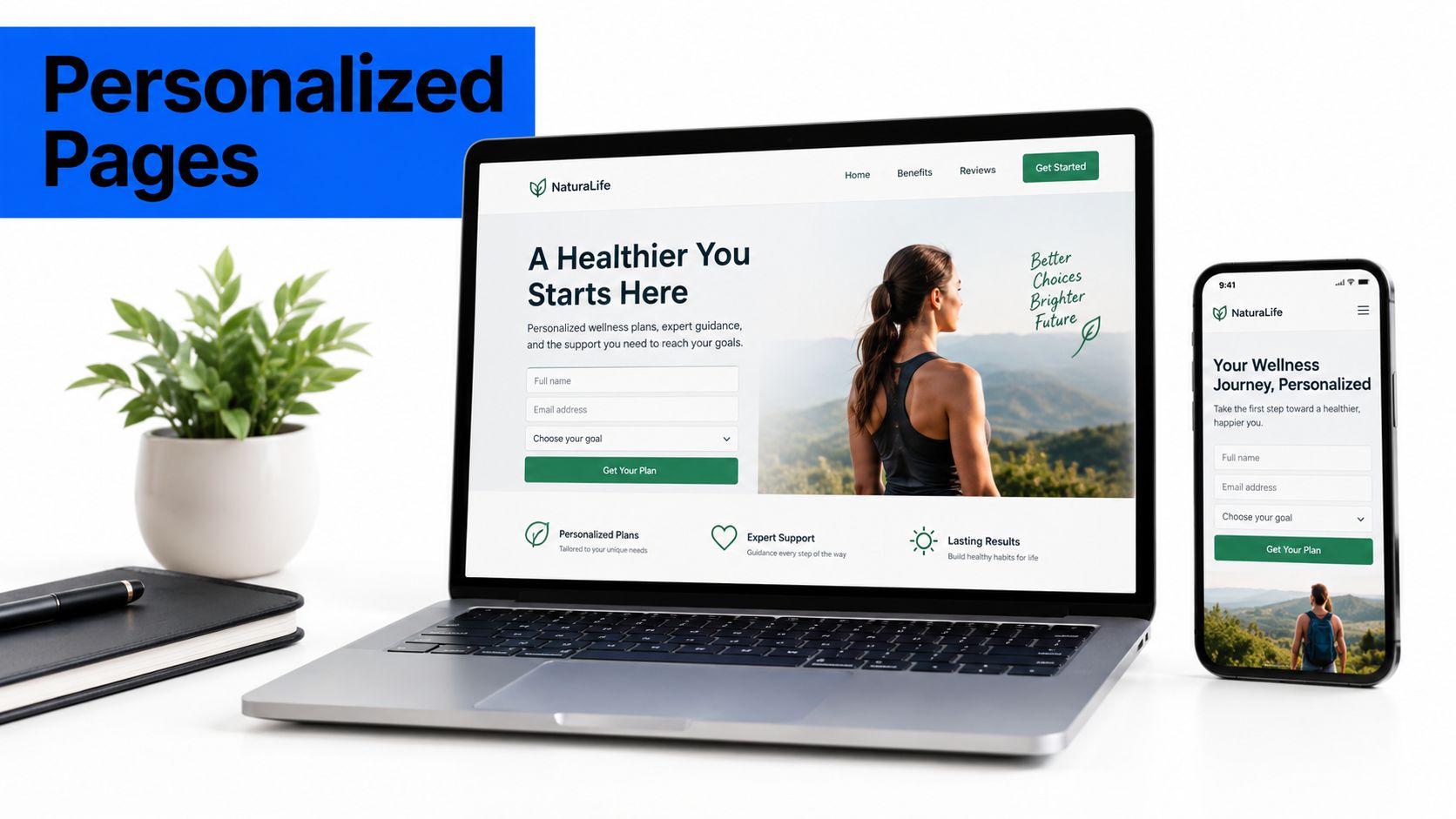
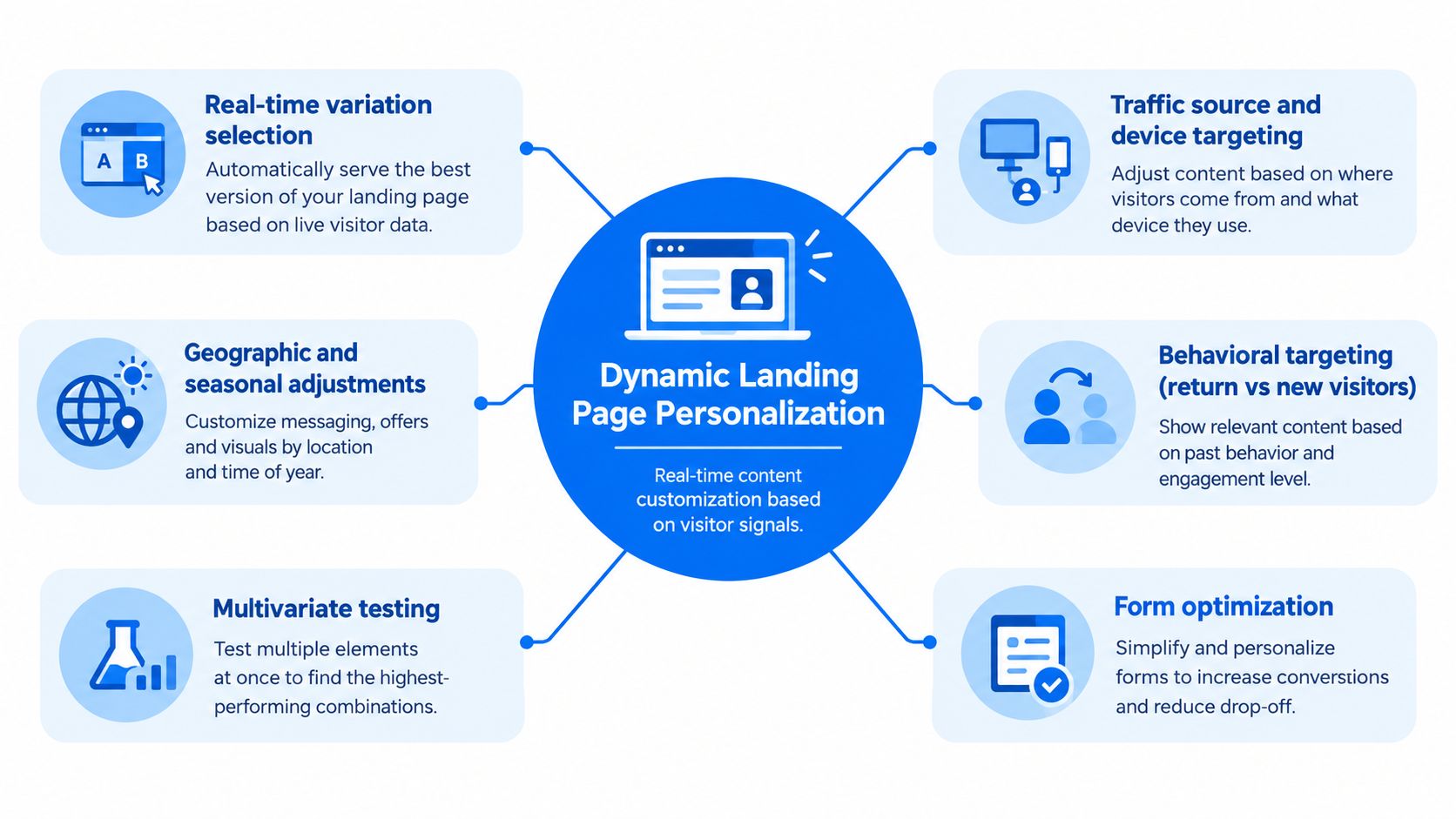
Landing page personalization works when the ad promise and the page message match the visitor's intent. A homeowner who clicks a Google ad for emergency plumbing shouldn't land on the same generic page as someone coming from a Facebook awareness ad. AI can change headlines, calls to action, and supporting proof based on traffic source, device, or behavior.
Here the value is conversion fit. If the user came from a high-intent search ad, the page should lean into urgency and direct action. If the traffic came from a colder social campaign, the page should add more trust signals and explain the service more clearly. That's one of the most practical ai in advertising examples because it connects creative directly to conversion.
BenjiAds' AI landing page builder fits that logic, since local-service funnels often need pages that are built around a specific trade, a specific area, and a specific action.
The best personalization starts small. A headline, a CTA, and maybe one proof block are enough for many local campaigns. If you overcomplicate it, the page becomes hard to manage and harder to explain when conversion rates change.
Rule of thumb: personalize for intent first, then for visitor profile. Search traffic, paid social traffic, and returning visitors usually need different page logic.
- Replicable tactic: create separate page variants for cold and warm traffic before trying deeper personalization.
- Control to watch: test mobile layouts separately, since most local-service traffic is mobile-heavy.
- Measurement to use: track form starts, form completions, and booked jobs by traffic source.
If you want a landing page to do more work, make sure the page is still simple enough for a homeowner to trust in ten seconds.
7. Predictive Attribution and Multi-Touch Modeling
Attribution is where local advertisers finally see that the last click didn't do all the work. A homeowner may see a Facebook ad, search the business name later, click a Google ad, and only then fill out a form. AI attribution models help assign credit across those touches instead of giving everything to the final click.
That matters because local service budgets are small enough that bad attribution can distort the whole plan. If Facebook helps introduce the brand and Google closes the lead, a last-click view may incorrectly starve the upper funnel. AI-driven multi-touch modeling gives a more realistic picture of what moved the prospect toward a call or booking.
The control issue is data quality. If tracking is incomplete, the model will still produce an answer, but it won't be reliable. That's why server-side and client-side tracking matter in local service environments, especially where form fills, calls, and SMS conversations all happen across different systems.
For a plumbing or HVAC company, attribution should answer practical questions. Which channel first introduced the job? Which one produced the booking? Which one helped recover leads who would have disappeared?
The point isn't perfect credit. The point is avoiding budget decisions based on a broken last-touch snapshot.
- Replicable tactic: compare attribution models before reassigning budget.
- Control to watch: make sure every meaningful touchpoint is captured across ads, landing pages, and follow-up.
- Measurement to use: review customer paths, not just campaign endpoints.
For local advertisers, better attribution usually doesn't mean more complexity. It means fewer false conclusions.
8. Automated SMS and Follow-Up Sequence Optimization
SMS is where many local leads are won or lost. AI-powered follow-up can decide what to send, when to send it, and how to route a response so the business doesn't leave a warm lead sitting unanswered. In a local-service funnel, this is the bridge between interest and booked work.
The best systems do not just blast reminders. They adapt sequences by lead type, timing, and response behavior. A homeowner with an urgent repair should get a different message from someone asking for a quote next month. That's especially useful for plumbing, electrical, and HVAC teams where speed and clarity influence booking odds.
BenjiAds' lead nurturing automation aligns well with this use case because the ad and the follow-up live in the same operational flow. That reduces the chance that a lead falls between tools.
A practical setup keeps messages short and action-oriented. One message can confirm the request, one can offer a next step, and one can handle no-response follow-up. If the sequence gets too long or too clever, it starts to feel like marketing instead of service.
Measurement matters most here. If your first text drives replies but not bookings, the message may be creating conversation without qualification.
- Replicable tactic: send the first follow-up fast, then branch by response type and urgency.
- Control to watch: keep consent, opt-outs, and message timing clean.
- Measurement to use: compare reply rate, booked rate, and no-response recovery by sequence.
For dentists and home repair businesses, SMS works best when it feels like coordination, not pressure.
9. Seasonal and Demand Forecasting for Campaign Planning
Forecasting helps local businesses spend when the market is most ready to buy. HVAC demand shifts with weather, landscaping often rises in spring and summer, and home repair can spike after severe weather. AI helps turn that pattern into campaign timing and budget planning instead of leaving spend flat all year.
The advantage is obvious once you think in operational terms. A campaign that runs at the wrong time may still generate clicks, but the leads won't convert as efficiently because the underlying need isn't there. The better question is not “can I advertise now?” but “what service demand is most likely in my market this month?”
That's also where local variation matters. A region with mild winters won't behave like a colder one, and a neighborhood with older housing may produce different repair needs than a new-build area. Forecasting should come from your own lead data, not just industry assumptions.
A disciplined planner tracks seasonality by service line, not just by total volume. A dental office may see different booking patterns around holidays, while a landscaping company may care more about weather windows than calendar dates. The AI is useful when it helps the owner stop treating every month like the same buying environment.
- Replicable tactic: map your monthly lead and booking patterns by service before setting annual budgets.
- Control to watch: separate market-wide demand from your own capacity limits.
- Measurement to use: compare cost per booked job across seasons, not across a single month.
If your demand shifts with weather or holidays, your ads should shift with it too.
10. Competitive Intelligence and Dynamic Pricing Strategy
Competitive intelligence shows local advertisers what nearby businesses promote, how their creative changes, and which offers appear repeatedly. AI can organize those signals across search ads, social creative, landing pages, and public promotions. That view helps an advertiser adjust positioning before changing bids or prices, especially when buyers compare a small group of providers.
Focus on market awareness rather than imitation: log when competitor messaging changes and identify the service gaps you can fill. If competitors emphasize discounts, your campaign might instead stress response speed, warranties, reviews, clear estimates, or emergency availability. If every landing page makes the same promise, a more specific service explanation can improve both ad relevance and lead quality.
Dynamic pricing requires stronger controls. AI can compare advertised offers and suggest when to test a discount, bundled service, or premium appointment option. The operator still needs to check labor costs, travel time, capacity, and margin. A plumbing company could test a transparent flat-rate inspection offer, while an electrical contractor might compare urgency messaging with price-led creative. A dental practice could monitor how competitors present first visits or financing. For an outdoor-services business, it may mean noticing whether every competitor competes on price while nobody discusses reliability, cleanup, or recurring maintenance.
Track competitors to identify offer gaps and test a clearer response, not to copy every promotion.
- Replicable tactic: follow a small set of direct competitors and record offer, message, landing-page, and price changes over time.
- Control to watch: reject price changes that weaken margins or exceed service capacity.
- Measurement to use: compare conversion rate, booked-job rate, and contribution margin before and after each messaging or offer test.
Competitive intelligence earns its place when it improves the full path from creative and targeting to booked work, rather than producing louder ads.
AI in Advertising, 10 Use Cases Comparison
AI-Generated Ad Copy and Creative Optimization
- 🔄 Implementation complexity
- Moderate, integrates with creative assets; needs human review
- ⚡ Resource & data requirements
- Low–Medium, seed data, brand guidelines, image assets
- ⭐ Expected outcomes
- High, rapid multivariate creatives; faster time-to-launch
- 📊 Ideal use cases
- Local service ad creation; multi-campaign scaling
- 💡 Key advantages / tips
- Provide detailed business inputs; enforce brand guidelines; review before launch
Predictive Lead Scoring and Qualification
- 🔄 Implementation complexity
- High, model training and real-time scoring integration
- ⚡ Resource & data requirements
- High, historical conversions, tracking, labeled leads
- ⭐ Expected outcomes
- High, better prioritization; higher close rates
- 📊 Ideal use cases
- Prioritizing SMS/phone follow-ups; high lead volume funnels
- 💡 Key advantages / tips
- Start with rules, add ML as data grows; review low scores regularly
Audience Segmentation and Lookalike Modeling
- 🔄 Implementation complexity
- Moderate, platform-driven but needs data prep
- ⚡ Resource & data requirements
- Medium, customer lists or first-party data
- ⭐ Expected outcomes
- High, finds new high-quality prospects; scales markets
- 📊 Ideal use cases
- Expanding to new geographies; audience expansion
- 💡 Key advantages / tips
- Use best-customer lists; test 1% vs 5% lookalikes; combine geo-targeting
Real-Time Bid Optimization and Budget Allocation
- 🔄 Implementation complexity
- Medium–High, needs accurate conversion tracking and controls
- ⚡ Resource & data requirements
- Medium, conversion tracking, initial budget, ROI targets
- ⭐ Expected outcomes
- High, improved CPL and lead volume; continuous spend efficiency
- 📊 Ideal use cases
- Limited budgets; campaigns needing automated bid management
- 💡 Key advantages / tips
- Set clear CPL targets; allow 2–4 weeks to learn; monitor spend pacing
Conversational AI and Chatbot Lead Qualification
- 🔄 Implementation complexity
- Moderate, conversational flows + scheduling integrations
- ⚡ Resource & data requirements
- Medium, NLU training data, scheduling/CRM hooks
- ⭐ Expected outcomes
- Medium–High, 24/7 qualification; reduced response time
- 📊 Ideal use cases
- After-hours lead capture; high-volume inquiry sites
- 💡 Key advantages / tips
- Keep flows simple; define handoff triggers; train on trade language
Dynamic Landing Page Personalization
- 🔄 Implementation complexity
- Moderate, requires personalization engine and analytics
- ⚡ Resource & data requirements
- Medium, traffic volume, content variants, A/B tooling
- ⭐ Expected outcomes
- High, 20–40% lift typical in conversions (depends on traffic)
- 📊 Ideal use cases
- Traffic with varied sources (ads, social); landing page optimization
- 💡 Key advantages / tips
- Start with headline/CTA variants; segment by traffic source; test mobile-first
Predictive Attribution and Multi-Touch Modeling
- 🔄 Implementation complexity
- High, complex data stitching and model interpretation
- ⚡ Resource & data requirements
- High, cross-channel tracking, server/client instrumentation
- ⭐ Expected outcomes
- High, clearer channel ROI; better budget decisions
- 📊 Ideal use cases
- Multi-channel advertisers (Facebook/Google simultaneously)
- 💡 Key advantages / tips
- Implement server-side tracking; allow 30+ days of data; compare models
Automated SMS and Follow-Up Sequence Optimization
- 🔄 Implementation complexity
- Low–Moderate, many platforms offer workflows; legal checks needed
- ⚡ Resource & data requirements
- Low–Medium, opt-ins, message templates, delivery provider
- ⭐ Expected outcomes
- High, higher response and booking rates; reduced lead decay
- 📊 Ideal use cases
- SMS-first lead capture; immediate follow-up critical services
- 💡 Key advantages / tips
- Send first message within 5 minutes; segment sequences; ensure compliance
Seasonal and Demand Forecasting for Campaign Planning
- 🔄 Implementation complexity
- Moderate, time-series models plus domain inputs
- ⚡ Resource & data requirements
- High, 12+ months historical data, weather/holiday feeds
- ⭐ Expected outcomes
- Medium–High, better timing and budget allocation; predictable peaks
- 📊 Ideal use cases
- Seasonal services (HVAC, landscaping, tax prep)
- 💡 Key advantages / tips
- Track 12+ months; set off-season brand budget; update forecasts regularly
Competitive Intelligence and Dynamic Pricing Strategy
- 🔄 Implementation complexity
- Moderate, monitoring tools + analysis workflows
- ⚡ Resource & data requirements
- Medium, external ad/price data, creative archives, review feeds
- ⭐ Expected outcomes
- Medium, actionable market gaps; informed pricing/offers
- 📊 Ideal use cases
- Competitive local markets where differentiation matters
- 💡 Key advantages / tips
- Monitor 3–5 rivals; extract messaging gaps; avoid reactive over-optimization
Turn These AI Advertising Examples Into a Controlled Test Plan
The cleanest way to use these ai in advertising examples is to sequence them by risk and dependency. Start with the foundation, trade-specific creative, conversion tracking, and fast follow-up. Those are the pieces that create usable signal. Then add bidding, audience modeling, and landing-page testing once the funnel is producing reliable lead data. After that, bring in attribution, forecasting, and competitive intelligence so you can make broader allocation decisions with less guesswork.
A local-service business should move in small, approved steps. Define the service and geography first, set an economically sensible lead target, and prepare compliance and approval checks before launch. Then run a limited test, review lead quality instead of clicks alone, and document the next approved change so the system improves without drifting away from business reality.
That's the main trade-off with AI in advertising. It can accelerate iteration, but it should not remove control from the owner or office team. Human approval still matters for pricing, claims, service area, and follow-up tone, especially when the lead has to become a booked job, not just a form fill.
BenjiAds is one relevant way to unify that workflow for local service businesses, since it brings creative generation, campaigns, landing funnels, tracking, reporting, and SMS follow-up into one system with approval gates. That kind of setup makes AI more useful because it connects the ad, the page, and the response process instead of treating them as separate tools. If you want to see how that works in practice, visit benjiads and review how its local-service workflow fits your trade, market, and follow-up process.
- ai in advertising examples
- AI advertising
- local business marketing
- ad automation
- lead generation
Done for you
Ads that text you customers.
- ✓ Ads created for you
- ✓ Every lead texts your phone
- ✓ Free to use, no credit card
748+ local businesses run ads with benjiads