Source: https://benjiads.com/blog/small-business-lead-generation
Publisher: benjiads, https://benjiads.com
Published: 2026-09-29
Updated: 2026-09-29
Cite as: benjiads, "Small Business Lead Generation: A 2026 Guide", benjiads.com/blog/small-business-lead-generation
Reuse: you may quote this article with attribution and a link to the source.
# Small Business Lead Generation: A 2026 Guide
Discover proven tactics for small business lead generation in 2026. Build a consistent pipeline with strategies that attract and convert quality prospects.
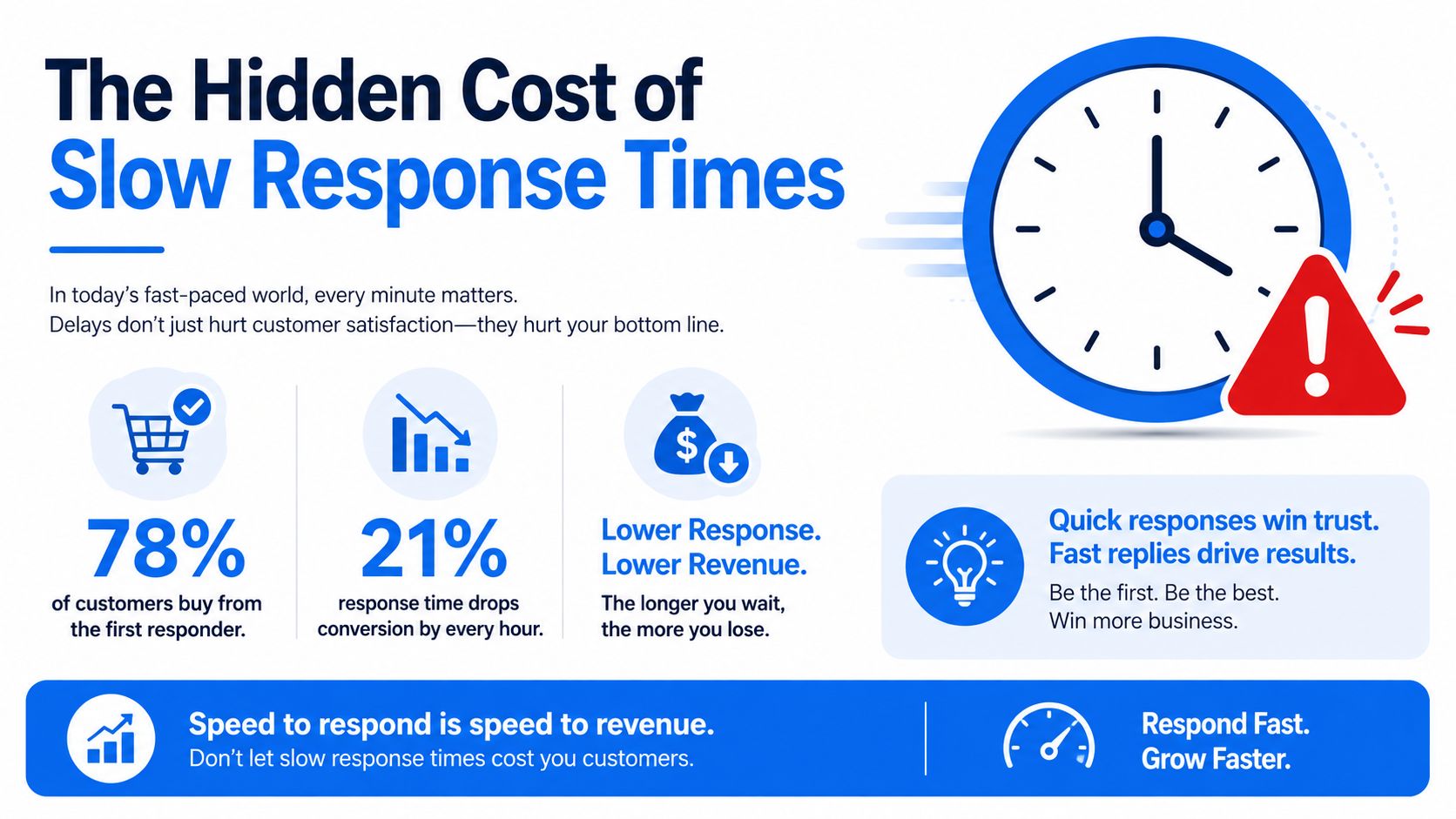
Responding to a lead within **5 minutes** can make it **9x** more likely to convert than waiting 30 minutes, and many small businesses convert only **2% to 5%** of leads without strong systems. The hard truth is that small business lead generation usually fails after the click, not before it.
Most owners keep asking for more traffic when the leak is what happens after someone fills out a form, taps call, or sends an email. A lead can be valuable for only a short window, especially in local services, so the first job is to protect that intent before it goes cold.
## Table of Contents
- [The Hidden Cost of Slow Response Times](#the-hidden-cost-of-slow-response-times)
- [Why the first responder usually wins](#why-the-first-responder-usually-wins)
- [Choosing Between Organic Trust and Paid Scale](#choosing-between-organic-trust-and-paid-scale)
- [Trust-building and scale work differently](#trust-building-and-scale-work-differently)
- [When each path makes sense](#when-each-path-makes-sense)
- [How the Modern Lead Funnel Actually Works](#how-the-modern-lead-funnel-actually-works)
- [What happens after the click](#what-happens-after-the-click)
- [Why follow-up is the real conversion engine](#why-follow-up-is-the-real-conversion-engine)
- [From Inquiry to Booking in a Local Service Business](#from-inquiry-to-booking-in-a-local-service-business)
- [The workflow that keeps the lead warm](#the-workflow-that-keeps-the-lead-warm)
- [Why follow-up drives conversion](#why-follow-up-drives-conversion)
- [Why Buying More Traffic Often Fails Without Infrastructure](#why-buying-more-traffic-often-fails-without-infrastructure)
- [More traffic can magnify the leak](#more-traffic-can-magnify-the-leak)
- [What infrastructure actually means](#what-infrastructure-actually-means)
- [Your Quick-Start Plan for Consistent Lead Flow](#your-quick-start-plan-for-consistent-lead-flow)
- [A short operating plan](#a-short-operating-plan)
- [Keep the system simple enough to run](#keep-the-system-simple-enough-to-run)
## The Hidden Cost of Slow Response Times
A plumber, electrician, or cleaning company doesn't lose a lead because the ad was weak. More often, the lead went to voicemail, sat in an inbox, or waited for someone to “get back later.” In that gap, the customer keeps looking.
The market norm is slow enough to make speed a real advantage. Independent 2026 reporting says many businesses still respond in hours, not minutes, and that some summaries put average response times around **42 hours** while smaller firms under 50 employees sit near **2 hours** on average. In the same body of reporting, a lead answered within **5 minutes** is said to be **9x** more likely to convert than one left for 30 minutes, and some summaries describe a **900%** lift versus a half-hour delay. Those are not minor differences, they're the difference between a booked job and a lost opportunity. [[why more leads won't fix your small business growth](https://www.saleshubhq.com/why-more-leads-wont-fix-your-small-business-growth/)]
### Why the first responder usually wins
The customer is rarely comparing ten companies in a careful spreadsheet. They're comparing whoever felt available, clear, and quick. That's why a missed call or delayed email can hurt more than a slightly higher price.
> **Practical rule:** if the lead can be texted, text them first. If the lead can be called, call them first.
In local service businesses, the phone is not just a contact point, it's part of the product. A homeowner with a broken boiler or a clinic patient who needs a callback wants to feel handled immediately. If they don't, they assume the same thing will happen after the sale.
An instant reply also changes how your team works. Instead of treating leads like a list to review later, you treat them like warm inventory with a clock on it. That shift is what turns **small business lead generation** from a marketing chore into a booking system. For a practical breakdown of how speed-to-lead workflows get built, see [this guide to speed-to-lead](https://benjiads.com/blog/speed-to-lead).
## Choosing Between Organic Trust and Paid Scale
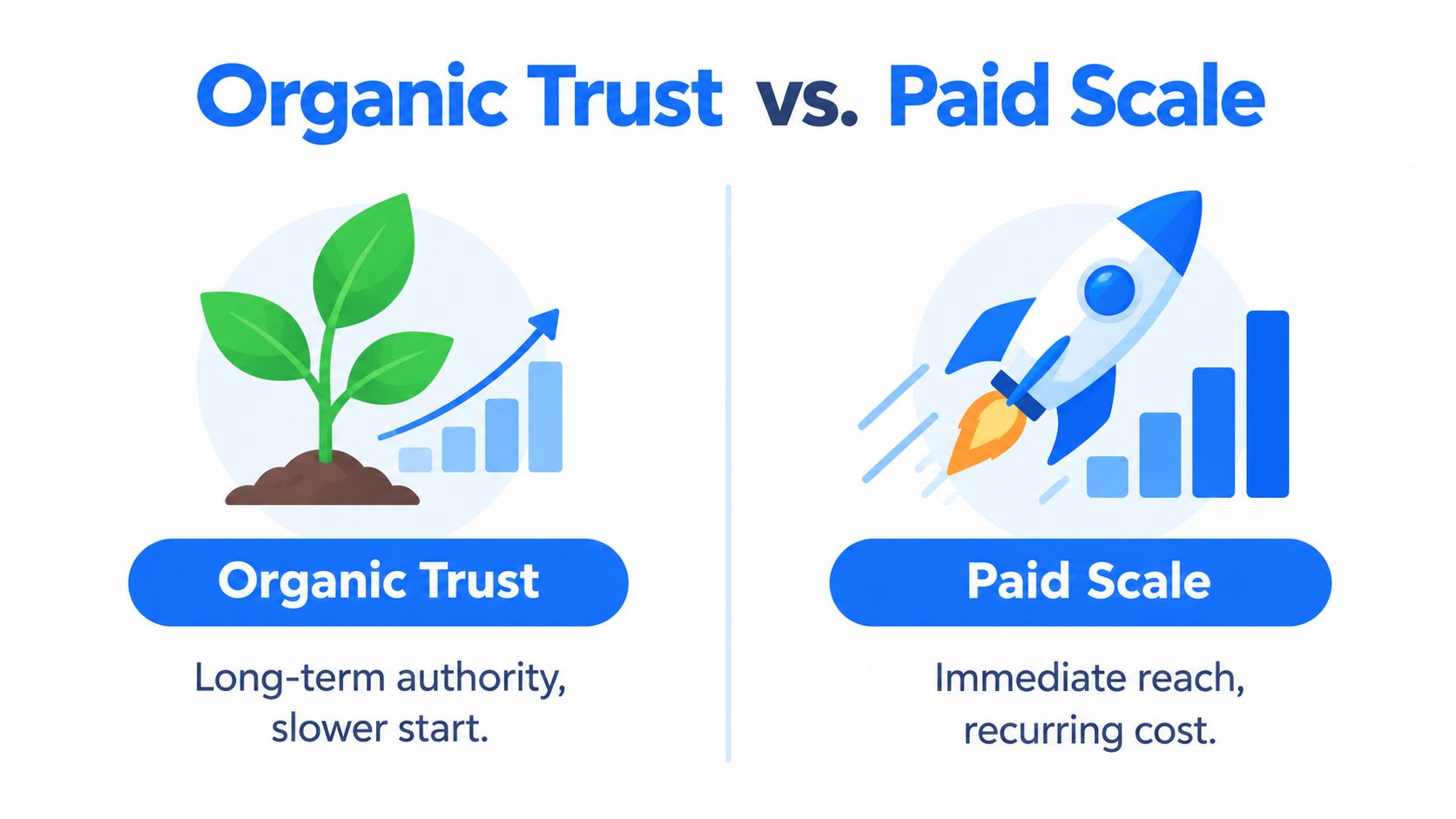
A lot of owners think they need to choose between “free” and “paid.” That framing misses the actual tradeoff. Organic channels build familiarity and trust over time, while paid channels buy attention right now.
The trust side is already embedded in how many buyers behave. A **2026 small business marketing report** found **83%** of surveyed businesses said customer referrals were their best source for customer acquisition, rising to **87%** among firms with 10 or fewer employees, while **46%** still named digital marketing and online advertising as a top source for new customers and leads. That mix says a lot. People don't reject digital, they just trust an introduction more than an interruption. [[small business marketing trends report 2026](https://localiq.com/blog/small-business-marketing-trends-report-2026/)]
### Trust-building and scale work differently
Organic trust comes from reviews, referrals, helpful content, and visible proof that you do what you say. It feels slower because the proof has to accumulate. Paid scale feels faster because your ad can place you in front of the right buyer today, but every click has to be earned again tomorrow.
For a local roofer, that might mean Google visibility, a clean website, and a steady review profile. For a B2B agency, it might mean case studies, LinkedIn activity, and a referral network. The buyer's logic is the same in both cases, though, they want the first credible option, not the loudest one.
> A paid lead that feels unsupported can be worth less than a slower organic lead that already trusts you.
That's why the strongest acquisition systems don't treat these as rival camps. They use paid media to create momentum and organic signals to make that momentum believable. In a local market, the ad gets attention, the reviews and follow-up conversation make it feel safe.
### When each path makes sense
Organic is usually the better starting point when you have time, expertise, and a service people research carefully. Paid works better when the buyer has urgent intent, the offer is clear, and your intake process can respond fast enough to protect the click. The key question isn't “Which is better?” It's “Which one can my business operate well today?”
## How the Modern Lead Funnel Actually Works
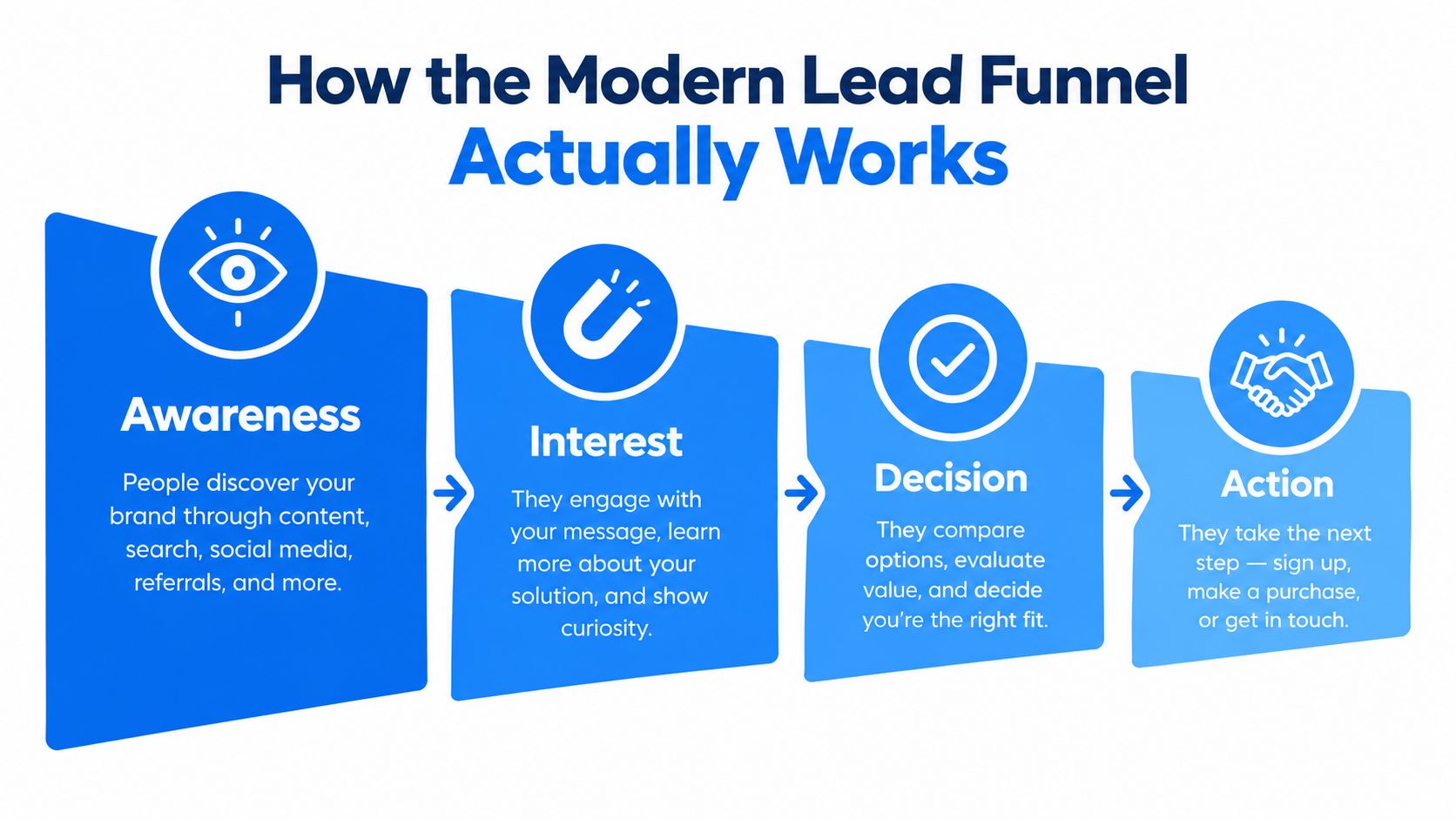
A lead funnel is just the path from first contact to booked job, but the path has more exits than most owners realize. A person can see the ad, click the site, open the form, start replying, and still disappear at any point. The funnel isn't a pipe, it's a series of gates.
The trouble is that many businesses obsess over the first gate and ignore the rest. They pay for traffic, then leave the response to a general inbox, a shared phone, or one person who checks messages after lunch. That's how you get the old benchmark problem where **79%** of marketing leads never convert to sales because follow-up is weak or absent. [[small business lead generation](https://www.nutshell.com/blog/small-business-lead-generation)]
### What happens after the click
A working funnel has four jobs. It has to capture attention, collect the lead cleanly, confirm that the request was received, and move the conversation forward fast enough that the prospect stays engaged. If any one of those breaks, the whole thing gets expensive.
The handoff matters most. A prospect who fills out a form wants evidence that someone is on the other side. The first message doesn't need to be long, but it does need to sound human, explain the next step, and remove friction.
A common mistake is assuming one follow-up is enough. In the benchmark material for lead generation, **44%** of salespeople give up after a single follow-up, while other summaries say new leads often need **6 to 8** follow-ups before conversion and **55%** of leads respond when follow-up arrives within **24 hours**. The lesson is simple. The funnel rewards persistence, not optimism.
### Why follow-up is the real conversion engine
Most owners think conversion happens on the landing page. It doesn't. The page starts the process, but the conversation closes the job. That's why form fills, calls, and bookings should all flow into a system that keeps working after the first touch.
The same logic applies to the leads who aren't ready yet. They might be comparing quotes, waiting for budget approval, or planning a project for later. If you disappear after the first attempt, they'll remember the business that stayed present.
> **Operational rule:** don't measure lead generation only by lead count, measure it by how many leads reached a real conversation.
## From Inquiry to Booking in a Local Service Business
A homeowner clicks a Facebook ad for a plumbing repair. The form asks for a name, phone number, and basic job detail. The lead enters the system, and within seconds the business sends an SMS confirming receipt and explaining the next step. That small handoff changes the sale.
The difference between “we'll email you later” and “we got it, here's what happens next” is trust. In a trade business, the customer is often buying relief from uncertainty, not just the lowest quote. If the first response sounds organized, the whole job feels safer.
### The workflow that keeps the lead warm
The first step is intake. The ad or landing page should ask only for what you need to qualify the request, not send the customer through a long form. For a local service business, speed matters more than collecting every detail upfront.
The second step is immediate routing. A text lands on the owner's phone or the office line, and the prospect gets an automatic reply with a clear promise. That can be as simple as “Thanks, we got your request, we'll follow up shortly.” The point is certainty, not clever copy.
The third step is booking. Once the lead confirms the basics, the business sends a calendar link or offers a callback window. That keeps the prospect from drifting while someone checks schedules manually. In practice, this is where many jobs are won.
### Why follow-up drives conversion
Manual email replies are the slowest part of the process. They depend on someone noticing the lead, deciding it is urgent, and writing back before the customer goes elsewhere. If the lead came in after hours, the delay gets even worse.
A better setup keeps the conversation alive even when nobody is at the desk. That means SMS confirmation, phone verification if needed, and a follow-up sequence that continues until the lead books or opts out. The business feels responsive without adding much more work to the day.
For owners who want a tool-based view of this workflow, [lead management software](https://benjiads.com/blog/lead-management-software) is where the intake, routing, and follow-up layers are usually organized.
## Why Buying More Traffic Often Fails Without Infrastructure
A larger ad budget can look like progress, but if the intake system is weak, it often just buys more leakage. A lead that arrives without a fast path to handling, qualification, and booking is like freight dropped at a warehouse with no dock crew. It sits there while value slips away.
The problem is usually not the channel itself. Paid search, social ads, and referrals can all generate interest. The loss happens after the click, where missed calls, slow replies, and scattered handoffs turn paid attention into wasted spend.
### More traffic can magnify the leak
If the front end is shaky, more traffic exposes it faster. The owner sees notifications. The calendar stays thin.
A small service company can spend heavily and still close very little if the intake process does not move people forward. A $1,000 monthly ad budget producing 50 leads at a 2% close rate books one job. Fix the intake path to a 10% close rate, and the same spend books five. The difference is not the ad. It is the system around it.
That is why buying more clicks before fixing the operating layer often raises cost instead of return. The business pays for attention twice, once to get the lead, and again to recover from poor handling. If the team does not respond, confirm interest, and route the inquiry cleanly, paid traffic turns into expensive noise.
Speed is part of that cost structure too. Research on lead response timing shows the gap between fast and slow follow-up is large enough to change outcomes, which is why [InsideSales research on lead response time gaps](https://www.insidesales.com/response-time-matters/) is still relevant here. Faster response does not replace a weak offer, but it prevents interested prospects from cooling off before anyone speaks to them.
### What infrastructure actually means
Infrastructure is the set of tools and habits that catches the lead after the click. It includes a landing page that captures the right details, a routing step that sends the inquiry to the right person, and a record of where the lead came from so budget decisions are based on evidence. The pieces matter because each one hands the job to the next without delay.
For many small businesses, the stack is simple. A form, a CRM, SMS alerts, a short follow-up sequence, and a reporting view can do the job. For a more detailed breakdown of how those parts are usually organized, [this lead management software overview](https://benjiads.com/blog/lead-management-software) is a useful reference.
A business can buy more demand at any time. Without infrastructure, it is paying to collect more unfinished conversations.
## Your Quick-Start Plan for Consistent Lead Flow
Start with the fastest win, not the biggest rebuild. If your current system misses calls or delays replies, fix that before you add another channel. In many businesses, that single change delivers more booked work than a new campaign ever would.
### A short operating plan
First, choose one paid channel or one organic channel that already fits your market. Second, make the lead capture path as short as possible. Third, set an automatic response so every new lead gets an immediate acknowledgement and a next step.
Then build the follow-up layer. A lead that doesn't buy right away still needs a sequence that keeps the conversation alive without sounding robotic. That's where SMS, reminders, and simple nurture messages do their best work.
**A useful order of operations looks like this.**
- **Fix response time first:** Make sure every form fill, call, or text gets an immediate acknowledgment.
- **Simplify the handoff:** Route leads to one person or one queue, not five inboxes.
- **Add proof:** Use reviews, testimonials, and recent job examples so the prospect feels confident.
- **Track sources:** Know whether the lead came from ads, search, referrals, or social.
- **Review weekly:** Look at missed calls, slow replies, and booked jobs, not just lead volume.
[Local lead generation software](https://benjiads.com/blog/local-lead-generation-software) is usually where these parts start to connect for service businesses that want one place to manage ads, intake, and follow-up.
### Keep the system simple enough to run
A lot of owners overbuild the process and then stop using it. That's why the best plan is the one your team will follow on a busy Tuesday. Keep the steps short, the response immediate, and the reporting easy to read.
BenjiAds helps local service businesses run ad creative, campaign setup, landing funnels, tracking, and SMS-based follow-up in one workflow, so the lead doesn't have to move through disconnected tools. If you want to see how that fits into your own service business, visit [benjiads](https://benjiads.com) and review the setup from the perspective of your own intake process.