Source: https://benjiads.com/blog/contractor-lead-generation
Publisher: benjiads, https://benjiads.com
Published: 2026-09-28
Updated: 2026-09-28
Cite as: benjiads, "Contractor Lead Generation: What Actually Works", benjiads.com/blog/contractor-lead-generation
Reuse: you may quote this article with attribution and a link to the source.
# Contractor Lead Generation: What Actually Works
Master contractor lead generation with automated ads, SMS follow-up, and tracking. Learn how local trades lower CPLs and book more jobs in 2026.
Most advice on contractor lead generation still chases the wrong number. A full inbox doesn't matter if the leads are shared, unverified, or answered after the homeowner has already moved on. The actual game is **lead economics**, not lead volume, and the businesses that win are the ones that control exclusivity, response speed, and follow-up orchestration.
If a contractor is paying for attention, the first question isn't how many leads came in. It's who else got the same lead, whether the phone number is real, and how fast the business replied. That's why modern contractor lead generation keeps shifting away from raw ad counts and toward systems that capture, verify, and contact prospects immediately.
## Table of Contents
- [The Shift from Lead Volume to Lead Economics](#the-shift-from-lead-volume-to-lead-economics)
- [Exclusivity protects margin](#exclusivity-protects-margin)
- [Volume metrics can mislead](#volume-metrics-can-mislead)
- [Building Automated Ad Campaigns for Local Trades](#building-automated-ad-campaigns-for-local-trades)
- [Start with the service, not the platform](#start-with-the-service-not-the-platform)
- [Put approval before spending](#put-approval-before-spending)
- [Designing Funnels and Verifying Intent](#designing-funnels-and-verifying-intent)
- [The landing page has one job](#the-landing-page-has-one-job)
- [Phone verification changes lead quality](#phone-verification-changes-lead-quality)
- [Mastering Speed to Lead with SMS Orchestration](#mastering-speed-to-lead-with-sms-orchestration)
- [The first responder usually owns the conversation](#the-first-responder-usually-owns-the-conversation)
- [SMS-first beats waiting for a call back](#sms-first-beats-waiting-for-a-call-back)
- [Attribution and Dual Conversion Tracking](#attribution-and-dual-conversion-tracking)
- [Track both the browser and the server](#track-both-the-browser-and-the-server)
- [Reporting should be readable in plain English](#reporting-should-be-readable-in-plain-english)
- [Budgeting and Unit Economics for Contractors](#budgeting-and-unit-economics-for-contractors)
- [Price alone doesn't tell the story](#price-alone-doesnt-tell-the-story)
- [Flat fee models change the risk profile](#flat-fee-models-change-the-risk-profile)
- [Daily Workflows and AI-Assisted Optimization](#daily-workflows-and-ai-assisted-optimization)
- [Keep the decision loop short](#keep-the-decision-loop-short)
- [Use approvals as a control layer](#use-approvals-as-a-control-layer)
## The Shift from Lead Volume to Lead Economics
The old playbook treated contractor lead generation like a numbers contest. Buy more clicks, buy more forms, buy more marketplace leads, then hope enough of them turn into booked jobs. That breaks down fast when the same homeowner is being sold to by multiple companies and every minute of delay gives competitors a better shot.
Shared leads create hidden leakage. Even if the upfront price looks fine, the true cost rises when the same inquiry gets resold, recycled, or answered late. A lead that is exclusive, verified, and contacted quickly is worth more than a cheaper inquiry that gets diluted before anyone from your shop speaks to the homeowner.
### Exclusivity protects margin
Exclusive leads don't magically close themselves, but they do preserve the opportunity window. When a homeowner fills out a form and only your company gets that inquiry, the conversation is still yours to win. When the same lead is distributed to multiple contractors, you're no longer competing on service alone, you're competing on response time, price pressure, and whoever sounds most available.
> **Practical rule:** if the lead can be resold, assume your margin is already under pressure.
That's why owned channels matter. A trade-branded funnel, a dedicated ad account, and a controlled intake path give you an advantage that shared marketplaces can't. You're not renting somebody else's audience, and you're not handing your future customer over to a platform that profits from broad distribution.
### Volume metrics can mislead
A contractor can get excited about lead count and still lose money. If the inbox fills with low-intent submissions, fake numbers, or slow-to-answer prospects, the business feels busy while booked-job rate stays flat. The right lens is simple, look at whether the channel produces **reachable, high-intent conversations**, not just names in a CRM.
That's the mindset shift. Contractor lead generation works best when it's treated as one system, capture, verify, contact, and nurture. The ad is only the first step, and in many cases it's not even the most important one.
## Building Automated Ad Campaigns for Local Trades
Local trades don't need clever media buying jargon. They need campaigns that point the right homeowner to the right offer, with enough structure that the business owner can tell what's working without living inside an ad dashboard. For electricians, plumbers, HVAC contractors, and other home-service businesses, the cleanest setup is usually one offer, one service area, and one landing path per job type.
### Start with the service, not the platform
Facebook and Instagram can be strong for reaching homeowners before they start comparing quotes, while search campaigns catch people who are already looking. The mistake is mixing too many services into one generic campaign. A homeowner searching for emergency AC repair shouldn't land on a catch-all “we do everything” page if you can help it.
Trade-specific templates reduce the setup burden. A short intake form can gather the job type, service area, and a few qualifiers, then the system can generate ad copy and images that match the trade. That keeps the message specific without forcing the owner to build every variation from scratch.
### Put approval before spending
A clean workflow matters more than clever creative. Ads should be drafted, reviewed, and paused until the business approves them, because contractors still need control over brand voice, service claims, and budget. The point is not to automate judgment, it's to automate the grunt work around it.
The best setup is boring in the right way. The platform prepares campaign structure, audiences, and creative drafts, then the owner signs off before anything goes live. That keeps a business from paying for ads it never meant to run.
One useful reference for this kind of workflow is [BenjiAds' overview of automated marketing platforms](https://benjiads.com/blog/automated-marketing-platform), especially if you want to see how trade-focused campaign setup can be simplified without handing over full control.
After the campaign is live, the creative still needs attention. A good field-tested ad usually does one thing well, it speaks like a local contractor, not a national brand. Job photos, service-area language, and a clear next step beat generic copy almost every time.
## Designing Funnels and Verifying Intent
A strong ad can still waste money if the landing page is sloppy. Contractors lose a lot of good traffic on pages that load slowly, ask for too much, or collect contact details in a way that never gets the prospect into a live conversation. The funnel has to do two jobs at once, filter out weak intent and make it easy for a real buyer to reach the business.
### The landing page has one job
Trade-branded funnels work because they keep the visitor focused on a single outcome. A dedicated subdomain, a service-specific headline, and a short form reduce friction. If someone clicked an ad for plumbing help, they should not have to sift through the company history, five service categories, and a gallery before they can ask for a quote.
That's also why masking contact details is a bad idea in a lead-gen context. If the business can't reach the prospect instantly, or if the system buries the phone number behind extra steps, response time suffers and so does qualification. Lead capture is not the finish line, it's the start of the sales process.
### Phone verification changes lead quality
Verified phone numbers matter because they tell you the lead is reachable before you invest more time. A form fill with a broken number or fake contact detail is a dead end. A real number, confirmed at intake, gives the contractor a path to SMS and voice follow-up right away.
Unified software helps. When the ad click, landing page, and lead record live in one environment, the business can see what source produced the lead, what page converted it, and how quickly the team responded. That kind of continuity matters more than most owners realize because it exposes where the funnel leaks.
> A landing page doesn't need to be fancy. It needs to make the next step obvious and collect a contact path you can actually use.
The practical test is simple. If a homeowner fills out the form, can your team text them immediately, call them back, and know which campaign produced the inquiry? If not, the funnel is still too disconnected.
## Mastering Speed to Lead with SMS Orchestration
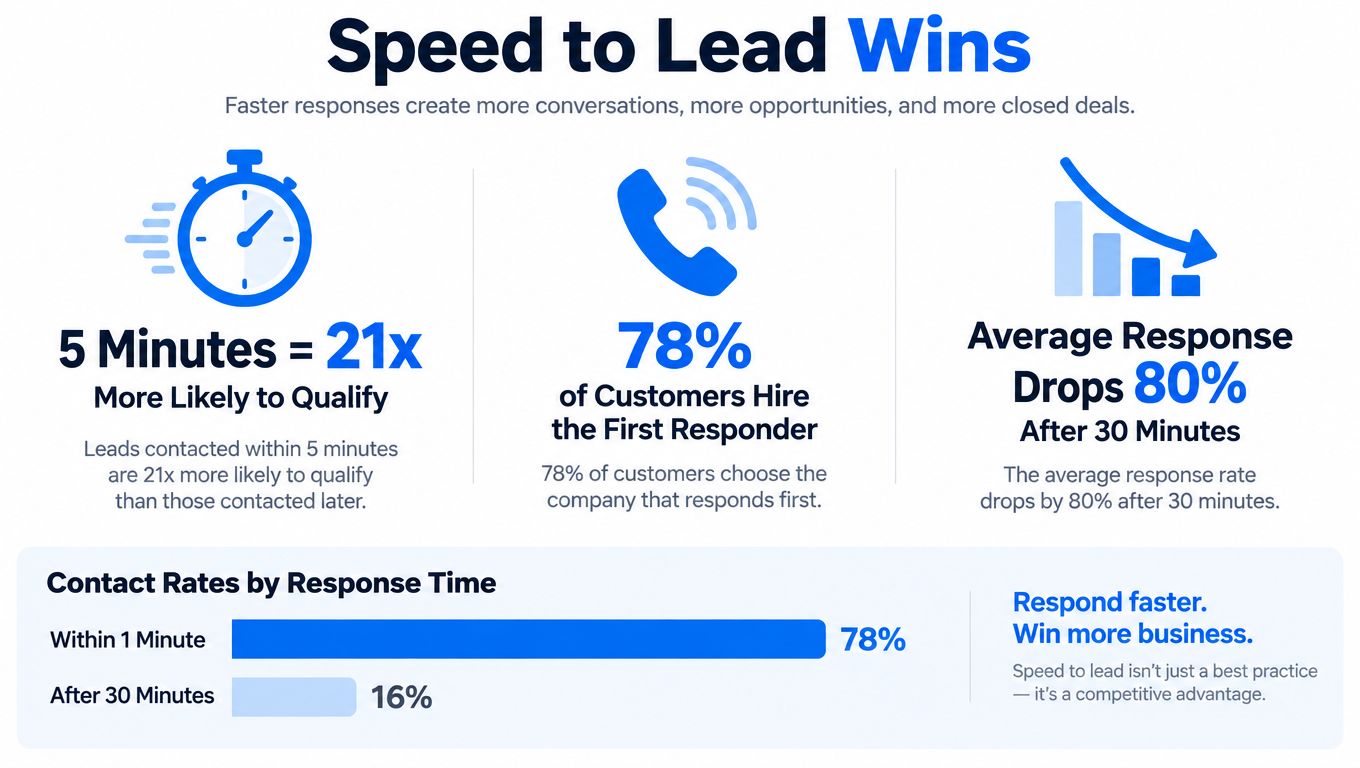
Speed to lead is where contractor lead generation either pays back or leaks money. In one analysis of 132,188 HVAC campaigns, only **12% of contractors responded within 5 minutes**, **88% took longer**, and **37% took a full day** to reply, while responding within 5 minutes made a contractor **21 times more likely to qualify the lead** than waiting 30 minutes. [pipelineon.com](https://pipelineon.com/blog/lead-response-time-home-service/)
### The first responder usually owns the conversation
A homeowner who just filled out a form is in buying mode. The urgency is highest right after the inquiry, before they start comparing quotes, switching tasks, or forgetting they even reached out. One benchmark cited from a large home-services dataset shows the average contractor converts **28%** of inbound leads at a **42-minute response time**, while responding within **2 minutes** raises conversion to **62%**. [pipelineon.com](https://pipelineon.com/blog/speed-to-lead-home-service/)
That is why the old “call them later” mindset fails. By the time a manual callback happens, the homeowner may already be talking to someone else. The first contact is doing more than starting a conversation, it's protecting the chance to book the job.
### SMS-first beats waiting for a call back
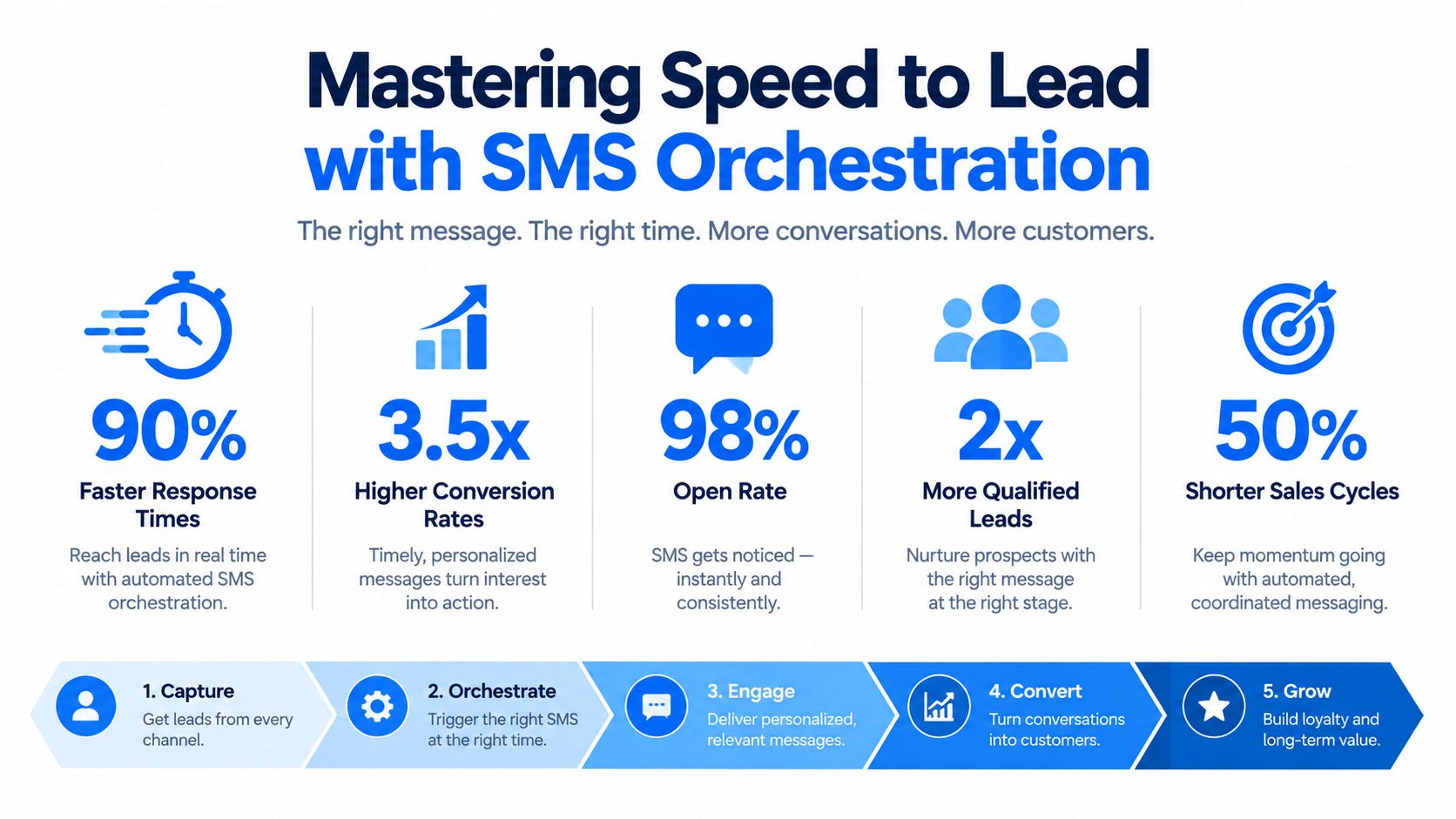
For home-service contractors, the practical response target is under **5 minutes** during business hours, with automation recommended to send the first text in under **60 seconds**. [hawkguru.com](https://www.hawkguru.com/speed-to-lead/speed-to-lead-benchmark-home-services) That timing matters because a fast text confirms receipt, sets expectations, and keeps the lead warm while a call is queued behind it.
A good sequence is simple. Text first, call second, then keep the lead in a persistence-based follow-up flow. The point isn't to spam people, it's to stay present while they're still evaluating who to hire.
One useful tactical note from [BenjiAds' speed-to-lead resource](https://benjiads.com/blog/speed-to-lead) is that SMS can be treated as the front door, not the backup plan. That lines up with how contractors win work in the field, by being the fastest clear answer in the prospect's inbox and on their phone.
> **Practical rule:** if you can't reply faster than the homeowner can keep shopping, your ad spend is working against you.
## Attribution and Dual Conversion Tracking
You can't improve what you can't measure, and contractor lead generation is full of bad measurement. Last-click reporting hides the path a homeowner took before submitting the form, and that makes it hard to know which ads deserve budget and which ones are just burning cash.
### Track both the browser and the server
Client-side tracking captures what happens in the browser. Server-side tracking captures the back-end conversion events that can be missed when cookies fail or a user moves between devices. Used together, they give ad platforms a cleaner signal and give the contractor a more accurate picture of what led to a booked opportunity.
That matters because platform learning depends on good data. If the ad system only sees partial conversions, it learns from partial truth. Dual tracking doesn't just help reporting, it improves the feedback loop that helps campaigns stabilize over time.
### Reporting should be readable in plain English
Owners don't need a spreadsheet that looks impressive and says nothing. They need a daily summary that shows leads, where they came from, which creative pulled, and what the response team did with them. If the report can't be understood quickly, it won't be used in the field.
A practical reporting stack should answer three questions:
- **What came in:** leads, calls, and texts from the day's campaigns.
- **What it cost:** cost per lead and whether the source is efficient enough to keep funding.
- **What to do next:** which ad, page, or audience should be kept, paused, or rebuilt.
Daily reporting should be honest, not decorative. If one campaign is producing contactable leads and another is creating noise, the business needs to see that without decoding a performance dashboard.
## Budgeting and Unit Economics for Contractors
Contractor lead generation gets distorted fast when people compare software, agencies, and DIY tools without looking at actual operating cost. The cheapest monthly fee can still be expensive if it wastes the owner's time, and the most polished agency can still underperform if it doesn't control exclusivity or follow-up.
| Model Type | Pricing Structure | Lead Exclusivity | Follow-Up Control |
|---|---|---|---|
| Shared marketplace | Pay per lead or subscription | Usually shared | Limited |
| Traditional agency | Monthly retainer plus ad spend | Often varies | Mixed |
| Automated software platform | Flat management fee on ad spend, no subscription | Can be exclusive | High |
| DIY stack | Tool subscriptions and owner labor | Depends on setup | High, if managed well |
### Price alone doesn't tell the story
A reported average cost per phone-verified lead is around **$7** across local campaigns, though this varies by trade and market. That figure matters less as a universal promise and more as a reminder that automated, trade-specific funnels can be efficient when they're built well. The key is whether the lead is real, exclusive, and reachable.
That's also why the right metric is not cost per lead in isolation. It's booked jobs, closed jobs, and ultimately cost per acquisition. A cheap lead that never turns into a conversation is worse than a more expensive one that gets scheduled and sold.
### Flat fee models change the risk profile
Some systems use wallet-based billing with a flat management fee on ad spend and no monthly subscription. That structure matters because it lowers the friction to pause campaigns without getting trapped in a long commitment. For a contractor, the flexibility itself has value.
If you want a formula to keep in your head, use this: spend less on storage, more on control. That means paying for ads, tracking, and orchestration in a way that lets you test, pause, and scale without rebuilding the stack every time you change direction. For a practical breakdown of how cost per lead should be calculated, [BenjiAds' cost-per-lead guide](https://benjiads.com/blog/cost-per-lead-formula) is a useful reference point.
## Daily Workflows and AI-Assisted Optimization
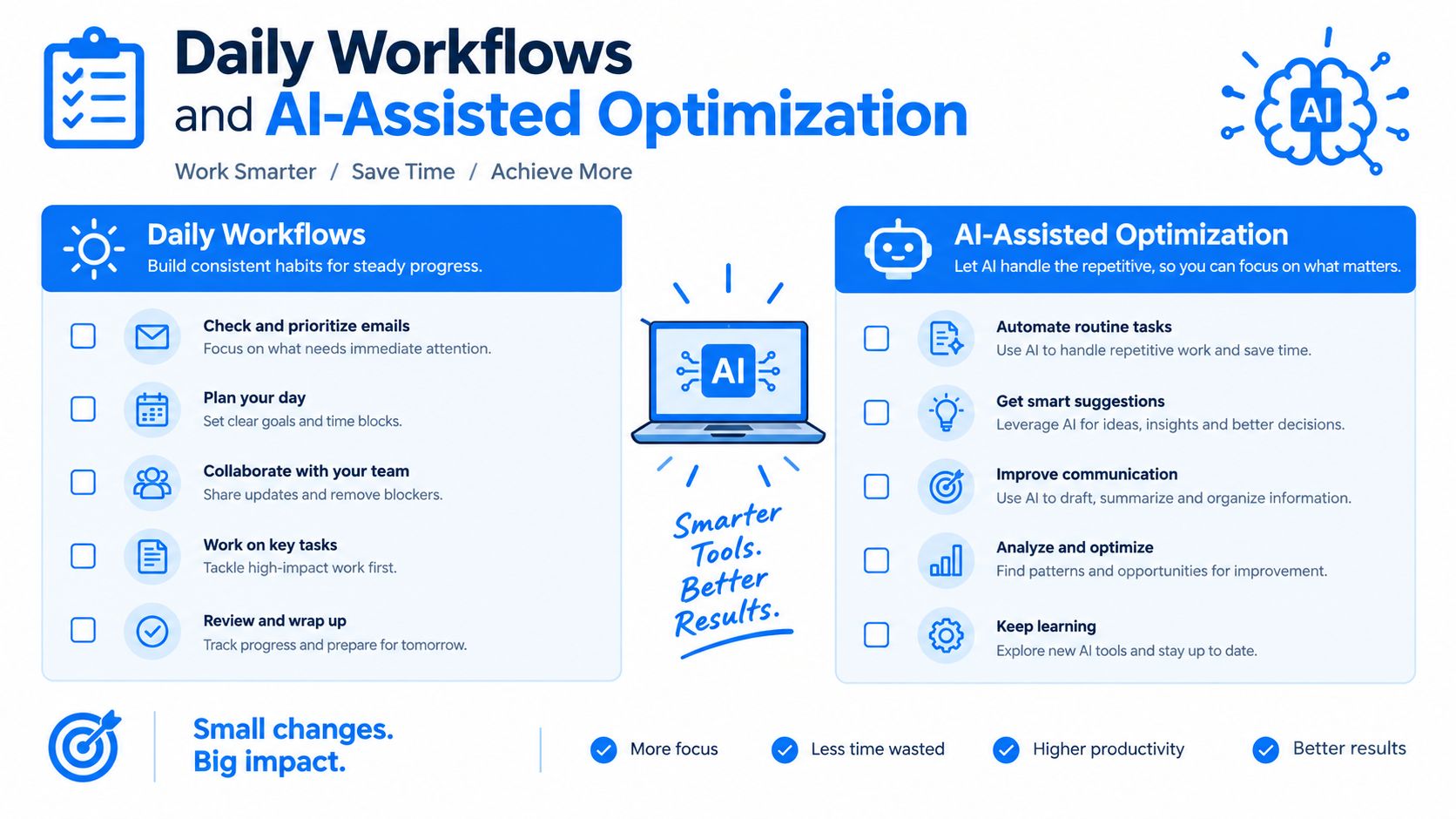
The most usable contractor lead generation system is the one an owner can run between job sites. That means the day starts with a plain-English summary, not an hour in Ads Manager. It also means approvals happen in a few minutes, not through a long back-and-forth with a marketer.
### Keep the decision loop short
A useful daily rhythm is simple. Review incoming leads, scan the response times, approve or reject any new creative, and flag anything that looks off. If the system needs a full-time marketer just to stay awake, the contractor is paying for complexity instead of efficiency.
AI assistants can help here by turning raw performance data into readable summaries. They can also draft new ad copy, prepare creative variants, and surface what's underperforming before the owner wastes another day's spend. The point is not to automate judgment, it's to make judgment easier to apply.
### Use approvals as a control layer
Approval gates are a strength, not a bottleneck. A business owner should be able to see proposed ads, pause anything that doesn't fit the brand, and greenlight the rest without opening a separate tool chain. That keeps the marketing system aligned with the shop's real-world standards.
A contractor who checks this every day stays close to the money. If leads are coming in but responses are slow, the owner can fix the process. If a creative is pulling junk, it can be cut before it becomes a habit.
> **Operational habit:** the best daily report is the one that tells you what to stop, not just what happened.
---
If you want a contractor lead generation system that focuses on exclusivity, fast follow-up, and reporting you can use, benjiads is built for that workflow. It automates ad creative, funnel setup, tracking, and SMS-based lead follow-up so you're not stuck stitching tools together or babysitting Ads Manager. Visit [benjiads](https://benjiads.com) if you want to see how that setup works for local service businesses.